Beyond Euclid #213
Welcome to Beyond Euclid #213, the newsletter for the best mathematics and science stuff of the week. I am Ali, and I curate cool math and science stuff every week to help you have a better week.
Hello from Beyond Euclid 213. This issue starts with category theory and ends with the internet being its usual chaotic self. In between there’s rocket photography, squeaky sneaker physics, miniature furniture, and Anthropic telling the Pentagon “no.” As always, the thing I find most interesting is how ideas that seem totally unrelated end up asking the same question in different languages. That happens a few times this issue. Let’s get into it.
But first, a quick note. Finding the signal in the noise — tracking down the right sources, cutting the junk, writing all of it up — takes a lot of time each week. If you find this worth your while and want to help keep it going, you can become a paid subscriber on Substack. Patreon is also an option. Sharing it with someone who’d enjoy it works just as well. Either way, glad you’re here.
Can the Most Abstract Math Actually Help the Planet?
Mathematician John Baez has been applying category theory to ecology. The core idea: don’t define things by what they are — define them by their relationships to other things. Applied to pandemic modeling, it catches errors like treating “35 people” and “35 doses” as mathematically interchangeable. His group’s software, StockFlow, lets models built by different experts actually talk to each other.
Baez’s bigger goal is the biosphere itself. “We treat living systems like machines,” he says. “But these systems are more complex than we can track.” The math to describe that doesn’t exist yet. Baez is trying to invent it. Quanta has a long piece on all of it — worth reading in full.
The Tiny Part Inside Your Pencil Has a Name: Chuck
Bryan Macomber’s Mechanical Pencil site is a remarkable archive: everyday objects — pencils, lighters, dispensers — taken apart and illustrated in 3D with interactive explainers. The little plastic piece that grips the lead? Its official engineering name is a chuck — same word as the clamping mechanism on a drill. The site goes well beyond pencils; the same detail is applied to a whole range of objects.
There are parts in things you use every day whose names you’ve never heard. Learning them doesn’t just satisfy curiosity — it builds genuine respect for engineering.
Sol Lewitt Drew a Complete Graph
Sol Lewitt, 1973: “All ifs ands or buts connected by green lines.” That web of green lines isn’t random. In graph theory, a complete graph means every node is connected to every other node. No missing links.
Lewitt applied that structure to conjunctions in language. Take every “but,” “and,” “or,” “if” in a text — connect them all with green lines — and you get a complete graph. Mathematical structure made visible through image-making.
I put this right after category theory on purpose. Both are saying the same thing: relationships matter more than the things themselves.
You Can Multiply 99 × 99 in Your Head
Find the gap between each number and 100. For 99, that’s 1. Subtract one gap from the other number: 99 − 1 = 98 — your first two digits. Multiply the two gaps: 1 × 1 = 01 — your last two. Answer: 9801. For 98 × 97: gaps are 2 and 3. 98 − 3 = 95, then 2 × 3 = 06. Answer: 9506.
Why it works: you’re expanding (100 − x)(100 − y) = 100(100 − x − y) + xy. Not magic — algebra. But each step is small enough to run in your head.
How Many Ways Can You Sew On a Button? 126.
A four-hole button, a piece of thread with two ends. Lily Lebus took this question seriously years ago and counted every one: 126 distinct geometric patterns. This is the 99 × 99 trick in reverse. There, a simple operation turned out to be algebra. Here, a simple action — sewing on a button — turns out to be choosing a point in a mathematical space.
The Great Nothing: The Boötes Void
The Boötes Void is a roughly spherical region of space about 330 million light-years across that contains almost nothing. Where you’d expect around 2,000 galaxies, there are 60. Discovered in 1981, it’s informally called the Great Nothing, and it’s one of the largest known voids in the observable universe.
Current theory: it formed through smaller voids merging over time. The universe has a sponge-like large-scale structure — superclusters where matter concentrates, vast emptiness in between. The Boötes Void is just the biggest known instance of the emptiness. What’s striking isn’t that it exists. It’s how large absence can get.
Wooden Sticks and Infinite Shapes: Yves Lappert
Swiss artist Yves Lappert works in a studio in Lausanne with wooden sticks and a light source. The sticks lean against a wall — but their shadows draw triangles, cubes, nested frames, impossible geometries. You know what you’re seeing isn’t real. Your eye believes it anyway.
The question: how much of what we see comes from the object itself, and how much from its shadow? The two don’t always match.
77% of American Teens Aren’t Getting Enough Sleep
Experts say teenagers need 8 to 10 hours of sleep a night. According to 2023 data, 77% of US high school students get less than that — up from 69% in 2007. A study published in JAMA shows where the change is coming from: not the average, but the extreme end. Kids sleeping five hours or less jumped from 16% to 23%. The sleep-deprived are getting more sleep-deprived.
Part of this is biology. During puberty, the brain starts releasing melatonin up to two hours later in the evening — falling asleep before 11pm becomes genuinely difficult, not laziness. Pair that with a 7:30am start time and the sleep window basically disappears. Schools in Minnesota that pushed their start time back by one hour saw students sleep more and show fewer signs of depression compared to nearby schools with the same demographics that kept the early bell. The fix is obvious. So why doesn’t it change? Because the school system wasn’t designed around children. It was designed around parents getting to work. The bell has been ringing at the same time since the industrial era. The biology has changed. The research has piled up. The bell hasn't moved.
The More You Use Your Phone, the More Disconnected You Feel — and Vice Versa
A study in Addictive Behaviors tracked 104 first-year university students every evening for 30 days. On days when students used their phones more than usual, they felt more disconnected the next day. On days when they felt more disconnected, they used their phones more the following day. Goes both ways. Gender and family income didn’t change the pattern — basically universal.
Willpower alone won’t break this. You have to replace the phone with something. You can’t break a habit by leaving a hole where it used to be.
A Drawing That Never Ends: Bruce Shapiro’s Sisyphus Table
Bruce Shapiro has been working on his Sisyphus project for nearly 20 years: a CNC-driven metal ball rolls slowly through a thin layer of sand beneath glass, leaving behind intricate mathematical patterns that evolve continuously without repeating.
The name is well chosen. Sisyphus wasn’t doomed by the labor — he was doomed by the repetition without meaning. These tables invert that: the motion repeats, but the pattern never does. Furniture that never quite sits still.
The Unsolved Physics of the Squeaky Sneaker
Harvard’s Katia Bertoldi and team studied why basketball shoes squeak. High-speed cameras showed the rubber sole rapidly snapping and slipping against the floor on impact — hundreds of tiny wave pulses, similar to fault ruptures in earthquakes. The tread pattern forces these into regular intervals, producing a steady pitch instead of noise. Flat sole: random noise. Patterned tread: something close to a tone.
The same math may apply to actual fault lines at geological scale. A gym squeak and an earthquake turn out to share an equation.
110 Volts From a Single Raindrop
Researchers in Seville coated a solar panel with an invisible plastic film and made a device that generates electricity from both sunlight and rain. When a raindrop hits and slides down the surface, the friction generates electricity — a single drop produced 110 volts. The coating also makes the surface more water-resistant, lets more light through, and protects the solar cell from moisture: three jobs at once.
The goal isn’t to replace rooftop panels. It’s the millions of tiny sensors in bridges, farms, and remote stations that currently run on batteries.
Can You Stop Lightning?
A Vancouver startup called Skyward Wildfire says it can spray metallic chaff into clouds and prevent lightning from forming. In 2023, lightning-caused fires in Canada burned 93% of the total area and released 500 million tons of carbon.
The method goes back to the 1960s: thin aluminum-coated fiberglass strips get scattered into clouds, act as conductors, redistribute the electrical charge, and — theoretically — prevent the buildup that causes lightning.
MIT and New Mexico Tech ran trials in Florida and found that clouds with chaff actually produced more lightning — 62,250 vs 24,492 strikes. MIT researcher Earle Williams calls the effectiveness “contested.” The company hasn’t published field data, hasn’t put out a peer-reviewed paper, raised $7.9M Canadian, and quietly removed the “up to 100% prevention” claim from their website after journalists asked questions.
The climate crisis is bad enough that we’re seriously considering half-tested ideas. Is that a sign of progress or desperation? Probably both.
A Liver You Inject With a Syringe
Over 10,000 people in the US are waiting for a liver transplant. A team at MIT tried something different: hydrogel microspheres mixed with liver cells that flow like liquid through a syringe and solidify once inside the body. In mice, they stayed alive for eight weeks and kept producing liver proteins.
They call it a “satellite liver.” The patient is still sick, but there’s a backup system running somewhere else in the body. One day “transplant” might become “injection.”
AI’s Hardest Exam Yet
AI models were acing every benchmark. So about 1,000 researchers from around the world built Humanity’s Last Exam: 2,500 questions you can’t just Google, each with one verifiable correct answer. Translation of Palmyrene inscriptions. Identification of microanatomical structures in birds. Ancient Hebrew pronunciation. If any AI model gets a question right, that question gets cut. The bar keeps rising.
Scores: GPT-4o: 2.7%. Claude 3.5 Sonnet: 4.1%. OpenAI o1: 8%. The most advanced models topped out around 40–50%.
“Humanity’s Last Exam” sounds scary. The point is the opposite — it’s showing how much AI still can’t do, and why human expertise still matters. Pattern recognition is one thing. Years of accumulated, context-dependent knowledge is another.
What Happened When Someone Told ChatGPT “Labs Are Normal”
A new study tested ChatGPT Health on 60 patient scenarios. In 51.6% of cases requiring emergency care, it said “stay home.” A woman who couldn’t breathe was told to book a future appointment 84% of the time. She wouldn’t have made it to that appointment.
The key finding: the system correctly triggers safety warnings in some scenarios — but add a few new details, change the context, and those warnings disappear entirely. The same input can produce opposite outputs depending on what else is in the conversation. A safety feature that only works sometimes is more dangerous than none at all.
The Pentagon Asked Anthropic to Remove Its Ethics Guardrails. Anthropic Said No.
The Pentagon asked Anthropic to remove its AI guardrails for mass domestic surveillance and autonomous weapons. Negotiations almost reached a deal — then a new demand arrived: bulk analysis of Americans’ search history, GPS data, and credit card transactions. Anthropic said no. The deal collapsed. Hegseth’s response: threaten Anthropic with the “Supply Chain Risk” label normally reserved for Chinese state companies.
Amodei’s paradox: the same government is simultaneously calling Anthropic a security threat and invoking the Defense Production Act to call Claude essential to national security. Both can’t be true. How AI companies respond to government pressure is one of the defining questions of the next decade.
Retirement and Miniature Furniture
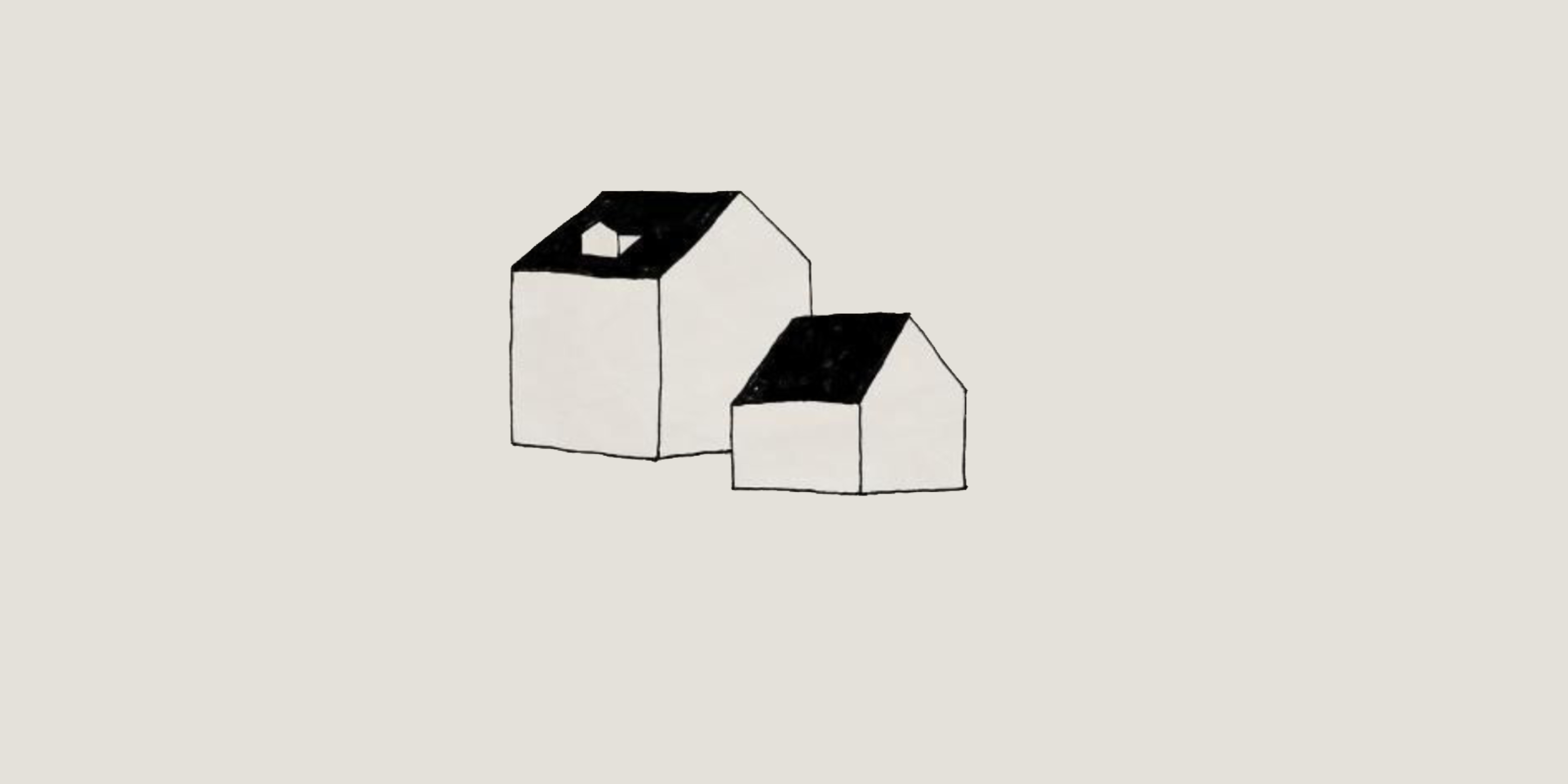
Retired furniture maker Terry Facey didn’t stop when he retired — he just changed the scale. Decades of working with heavy full-size hardwood. In retirement, he makes the same designs at miniature scale. Same engineering, same attention to detail, same materials. Just smaller.
Calling this a “hobby” sells it short. It’s a craftsman finding a new language for his work in the second half of his life.
The Table That Looks Like It’s Walking
KILZI’s Barefoot Walking Table has no straight vertical legs. Instead, curved organic wooden legs that widen toward the floor — like a foot taking a step. The table isn’t moving. But it looks like it is.
Anthropomorphic design: giving human-like forms to non-human objects. Adding soul to a piece of furniture without messing up the function. Terry Facey changed the scale. KILZI added movement. Both added something that wasn’t there — and both made you stop and look twice.
A Size 8 in One Brand Is a Size 12 in Another
Amanda Sakuma and Jan Diehm’s piece at The Pudding puts numbers to something most women already know: the same size label means wildly different things across brands, and standard sizing has little to do with actual body shapes. The visualization uses illustrated female figures instead of abstract dots — the data stays readable and feels like it’s about people.
The inconsistency isn’t confusion. It’s by design. Every brand sets its own standards; there’s no shared system.
60,000 Artworks, Free to Download
The National Gallery of Art in Washington DC has 60,000+ works available to download for free, up to 3,000 pixels wide. Van Gogh, Gauguin, Rembrandt — Renaissance through modern and colonial periods. Standing in front of the actual painting is still completely different. But you can’t develop curiosity about something you’ve never been able to access.
Birds Aren’t Just Declining — They’re Declining Faster
A new study in Science tracked 261 species along 1,033 routes from 1987 to 2021. The headline finding: bird populations in the US aren’t just falling — the rate of decline is accelerating. A route losing 10 birds per year early in the study was losing around 19 birds annually by the end. Steepest losses in Florida, Texas, Louisiana, and Arizona. Strongest predictor: agricultural intensity.
The 2019 landmark study already found 2.9 billion birds lost since 1970. This new data says that loss is speeding up. Species that depend on insects are declining; species that don’t are increasing. The chain runs downward.
The Birth Rate Is Falling Because Rent Is Too High
A new paper from the University of Toronto attributes roughly half of the recent US fertility decline to rising housing costs — and estimates that 13 million more children would have been born between 1990 and 2020 if prices had stayed stable. The counterintuitive policy finding: building more small units doesn’t help as much as building three-bedroom units. Small units make it easier to live alone. Large units make families possible.
A separate survey of 6,000 Americans confirmed that people are willing to pay more per square foot for apartments with extra bedrooms — meaning the demand exists and isn’t being met. Housing policy is demographic policy. Treating them separately is part of why both keep getting worse.
Trees Go to the Rich Too
MIT’s researchers studied nine cities and found: “Just by looking at which areas have shade, you can tell where rich and poor people live.” The surprising detail: Stockholm’s least shaded neighborhoods get more shade than Belém’s most shaded ones — but the inequality within Stockholm is sharper than within Belém. More trees overall, still going to the right people.
If cities planted trees along public transit routes — where low-income residents actually walk — the gap would narrow fast. Shade isn’t decoration.
How Ralph Morse Photographed a Rocket From the Inside
That famous five-frame vertical sequence of Apollo 11 lifting off: LIFE photographer Ralph Morse spent two years convincing NASA and RCA to let him do it. He had optical glass fitted into a steel box on the launch platform, loaded a Nikon with 30–40 feet of film, and synchronized it with the countdown. Ten frames per second, starting at minus four seconds.
An hour after liftoff, they went up in the elevator and retrieved the camera. The photo of the century was taken automatically, in a place no human could stand.
The Technology Behind the Khamenei Assassination Plot
CNN’s report describes how the operation was built: Tehran traffic cameras hacked years earlier, feeding continuous movement data into a system that combined visual surveillance, human intelligence, signals intelligence, and satellite imagery. The output was precise enough to identify a specific room. All of it assembled from infrastructure that was originally just city traffic management.
That’s the part worth sitting with: cameras that were put up to manage intersections ended up as targeting infrastructure. Who’s thinking about that when the cameras go up?
Countries Are Drifting Away From the US and Toward China in UN Votes
A Focaldata analysis of UN voting records — visualized by The Guardian with sloped arrows — shows countries moving out of the US orbit and toward China’s position. Dozens of countries, dozens of votes, one clear direction.
The short version of the commentary: “Countries appear less enthusiastic about the current US administration’s global approach. Very surprising.” The sarcasm is intentional.
Americans Are Leaving America
For the first time since the Great Depression, more people are leaving the US than arriving. The administration frames this as a win for immigration enforcement. But a lot of the people leaving are American citizens — moving to places they find cheaper, safer, quieter. Remote work, retirement, school abroad. The “American Dream” increasingly means not living in America. When a country’s biggest export starts being its own citizens, that’s usually a signal. Who’s listening is a different question.
The Pope’s Two Warnings
Pope Leo XIV held a closed Q&A with Rome’s priests in February. Two things stood out. First: “Don’t use AI to write your sermons. Your brain atrophies if you stop using it. AI cannot share faith.” Second: he named what he called one of the biggest epidemics among clergy — invidia clericalis. Clerical jealousy. A priest envying another who got assigned a bigger church.
The second warning is more interesting. Everyone can say the AI thing. But giving a behavior a name makes it visible. You can’t fight something that doesn’t have a name. That’s true in every institution, not just the Church.
A $599 Mac. Chromebook Is in Trouble.
Apple announced the MacBook Neo at $599 ($499 education) running the chip from the old iPhone 16 Pro. The logic: old phone chips are now cheap and powerful enough. Chromebooks won on price, but Google’s Auto Update Expiration policy gives every device a software death date. Apple is walking into school procurement meetings with a long-term support pitch.
No backlit keyboard, no fast charging — intentional cuts to protect higher-margin models. The cheapest MacBook and cheapest iPhone are now the same price. That sentence would have seemed absurd five years ago.
This Week’s Weird Corners of the Internet
Rename the World: a site where anyone can rename any location on a world map to whatever they want. The Vatican is now “American Theocratic Gerontocracy.” London’s Marylebone is “obvious pronunciation trap for tourists.” Someone else’s neighborhood is considerably more obscene. The writer’s note: “The fact that the urge to add jokes to our shared geographic memory is this universal is interesting in itself.”
Homer Radio: Someone uploaded 60,000+ AI-generated song covers in Homer Simpson’s voice to SoulSeek. Someone else built a 24/7 radio station playing them. The writer’s response: “I want to say something about the time and energy humanity has put into this project but I don’t know what. I just bow respectfully.” Hard to improve on that.


