
Beyond Euclid #217
Welcome to Beyond Euclid #217, the newsletter for the best mathematics and science stuff of the week. I am Ali, and I curate cool math and science stuff every week to help you have a better week.
Hello from Beyond Euclid 217. Hope your week was good. Mine was a little different — my dad flew in from Turkey, and we spent a good chunk of the week out in the backyard workshop together. Building things, fixing things, not saying much. That kind of time is hard to come by and I don’t take it lightly.
This issue has a 599-digit number made almost entirely of nines that turns out to be prime. William Benson’s 1868 color cube, which maps the entire spectrum onto a three-dimensional grid. A serious academic paper calculating exactly how many lies Pinocchio can tell before his neck snaps. Sweden bringing back physical textbooks. A small Irish town that quietly convinced 70% of parents to delay smartphones — and it worked. A zipper video I watched twice. A Georgian billionaire who shipped 200 ancient trees to his garden. Google’s AI getting one in ten answers wrong, which sounds fine until you do the math. Among other things.
If something in here was worth your time, consider a paid subscription on Substack or supporting on Patreon — it helps more than you’d think. Forwarding to one person who’d be into it works just as well.
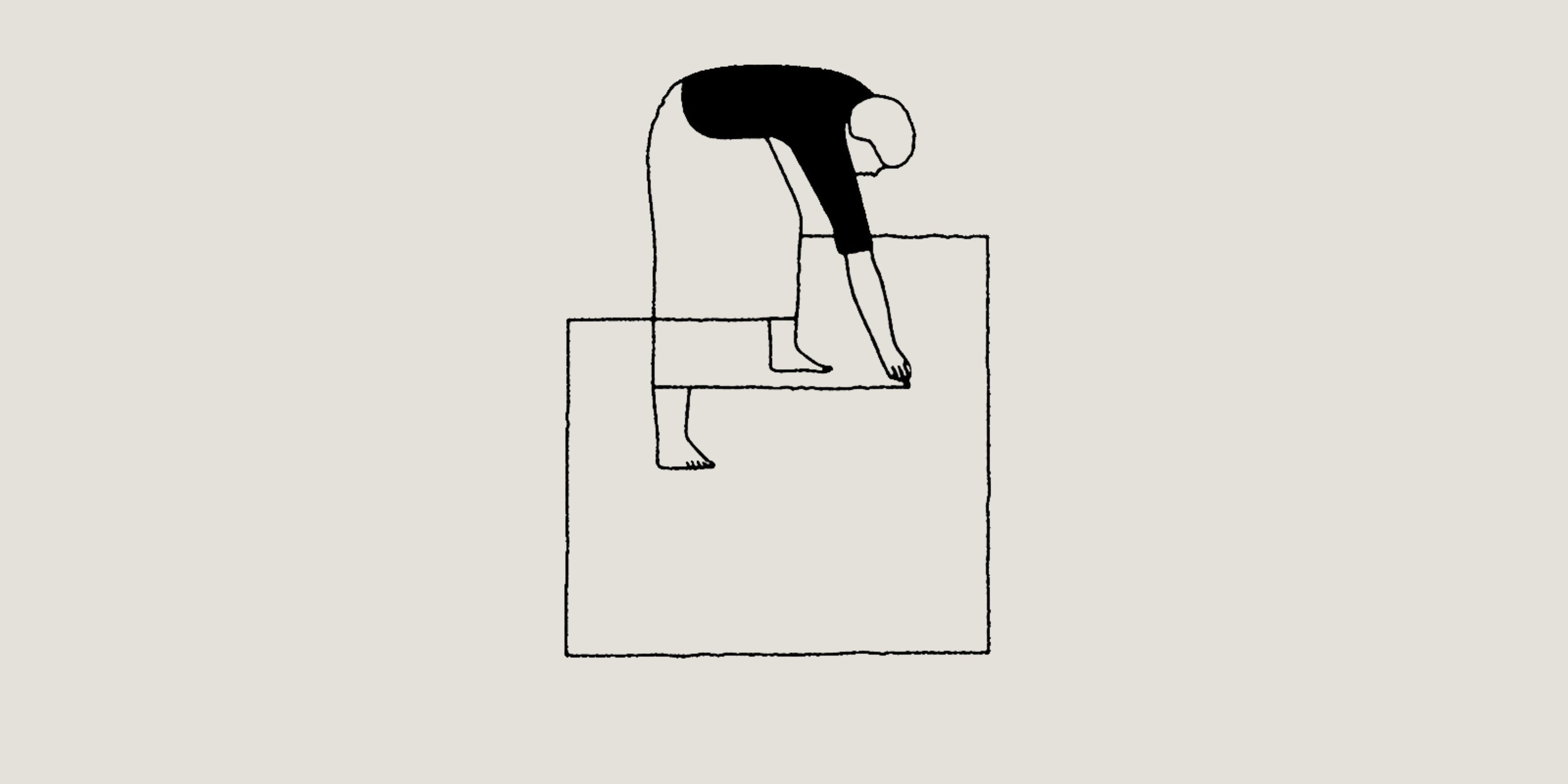
🔢 599 digits, all nines — except one 8 in the middle. And the whole thing is prime. No divisors, just 1 and itself. It’s pure coincidence that something this visually symmetrical turns out to be prime, but looking at it and saying “this can’t be divided” is close to impossible for a human brain.
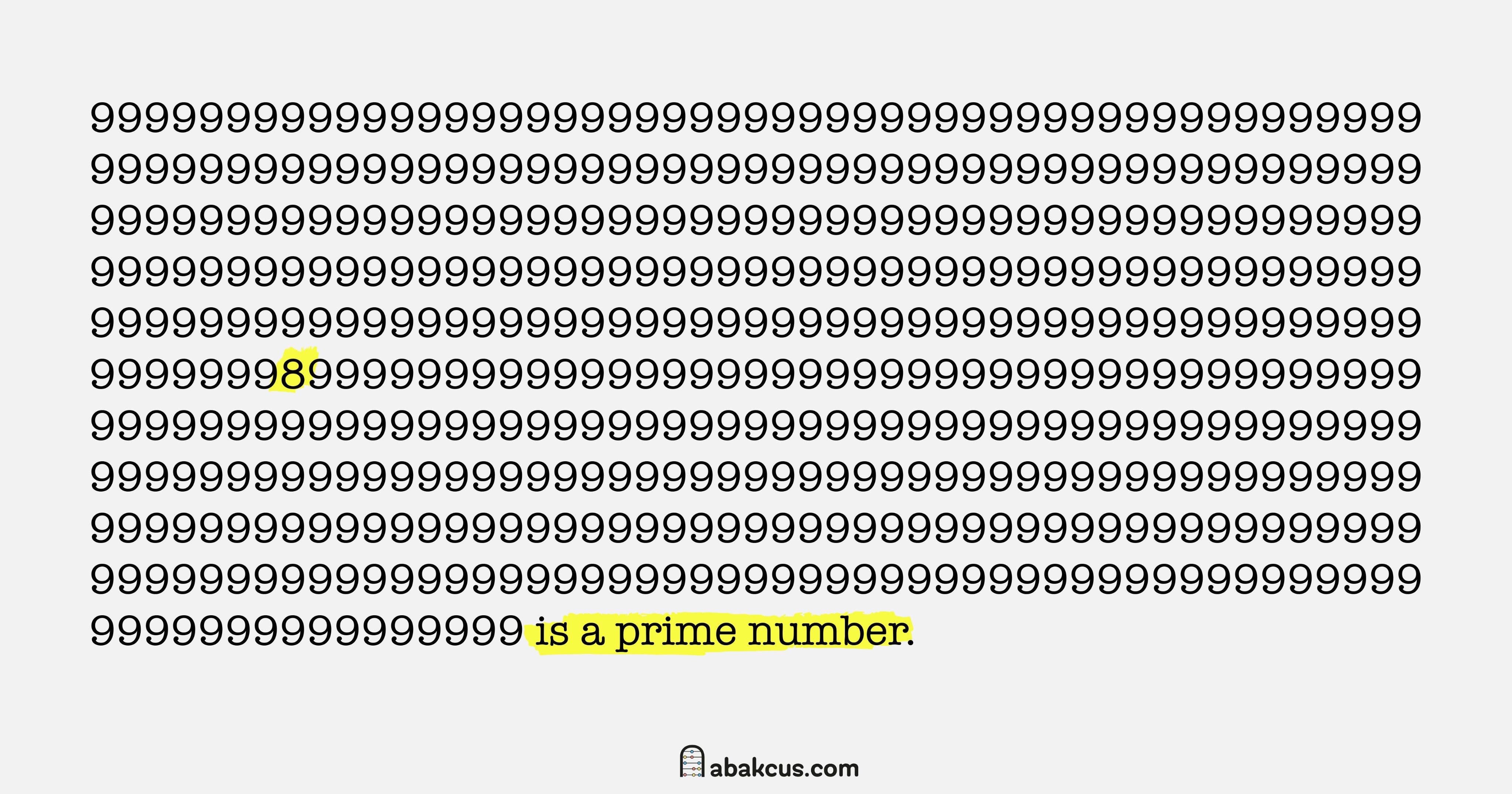
🎨 William Benson’s 1868 Color Cube chart — one of the earliest attempts to map colors systematically across three dimensions. Each group represents a cross-section of the cube, with saturation, brightness, and hue all shifting at once. The math of color theory rarely gets this tangible.
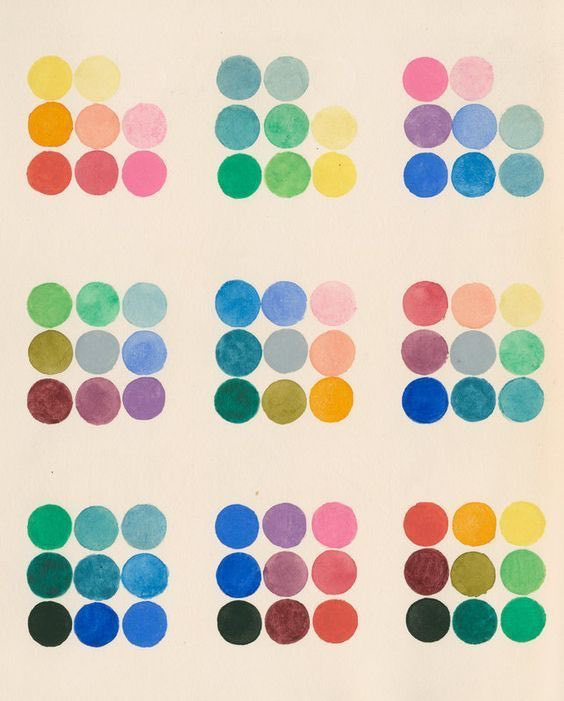
🪵 A researcher at the University of Leicester took a very serious look at a very specific question: how many lies can Pinocchio tell? Since his nose doubles with every lie, the lever force on his neck compounds exponentially. According to the calculations, after the 13th lie, the nose reaches 208 meters, the center of mass shifts by 85 meters, and the neck can no longer hold. Conclusion: 12 lies max. The 13th is lethal.
🧠 mymind — one of the best apps on the internet, and one I’ve been using for a long time — published a good piece last week on how algorithms quietly disconnect us from our own taste, and how to get it back. It starts with a stat: 48% of Gen Z buys products they don’t actually like, and nearly half finds it harder to make decisions. The argument is that taste isn’t a performance — it’s a private, ongoing process of discovery. Worth reading.
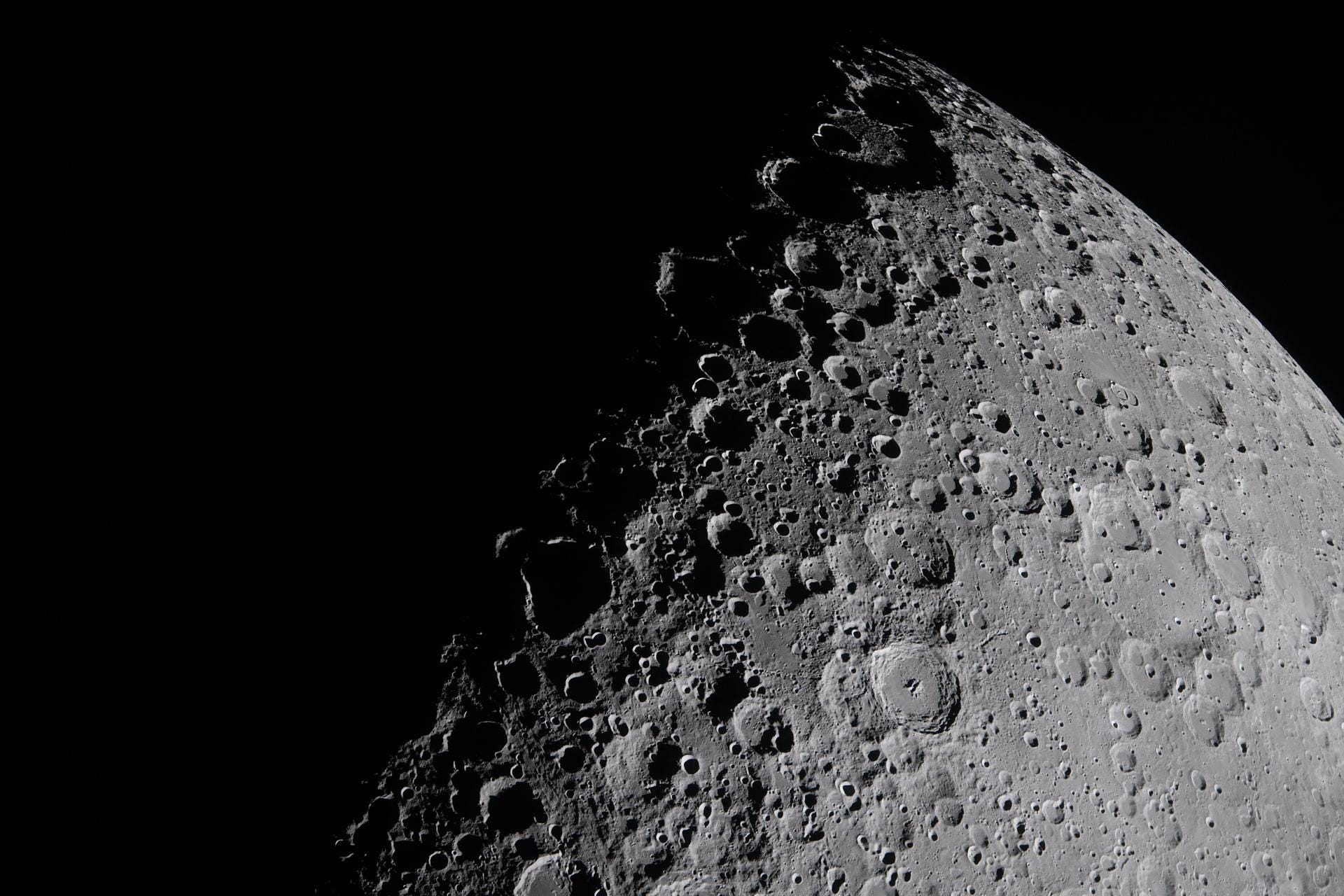
🌕 NASA’s Artemis II crew made a seven-hour pass over the lunar far side on April 6th and photographed regions no human has ever seen before — including a rare solar eclipse observed from space. Released on April 7th, these images mark humanity’s first visual record of returning to the Moon’s vicinity.
🌍 1972 → 2026, Apollo 17 → Artemis II: on the left, the “Blue Marble” taken by Apollo 17. On the right, Earth as photographed by the Artemis II crew on April 6th. 54 years, same vantage point. Look closely at the upper right corner — you can see the aurora borealis.


🗺️ So how did we first see the lunar far side at all? A beautifully written piece walks through the history: until the Soviet Luna 3 probe photographed it with a film camera in 1959, humanity had never seen half of its own Moon. The story runs from there through NASA’s Lunar Orbiter program and Apollo’s orbital passes — and explains why Mare Orientale, photographed by Artemis II, is so significant. Apollo astronauts never got a clean look at it due to their orbital geometry. Seeing it in full sunlight was left to Artemis II.
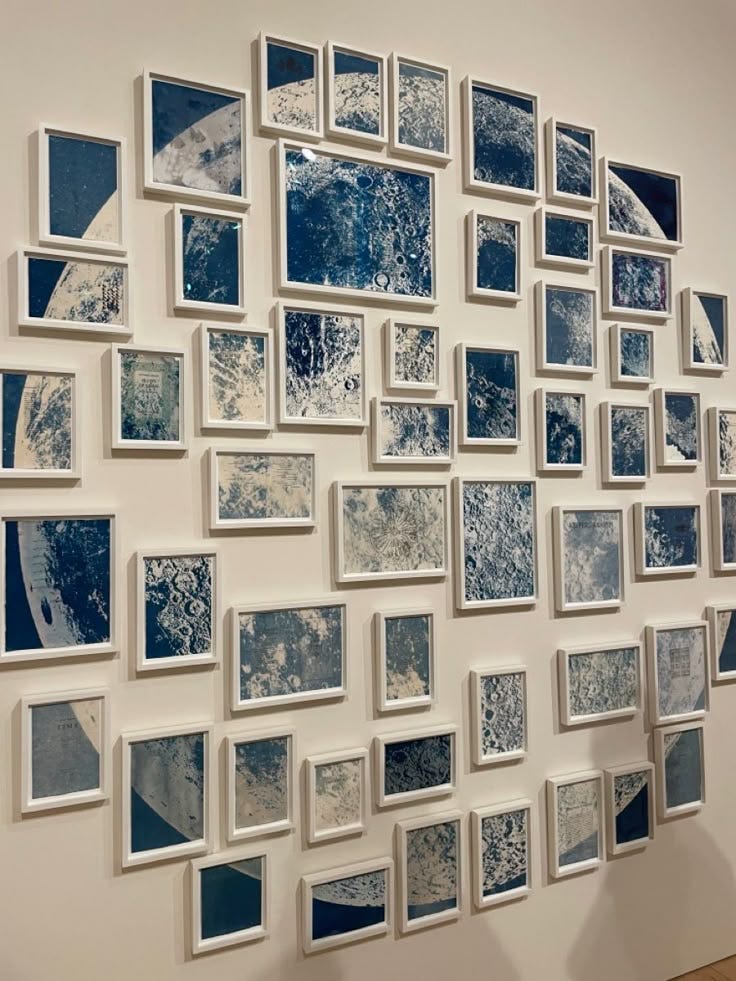
🖼️ A fitting piece for Artemis II week: Ala Ebtekar’s “Thirty-Six Views of the Moon” — the artist sourced a photographic negative of the Moon from Lick Observatory, broke it into fragments, and printed cyanotypes onto pages from books spanning ten centuries. Under moonlight. The result is 36 frames covering an entire wall, each showing a different face of the Moon.
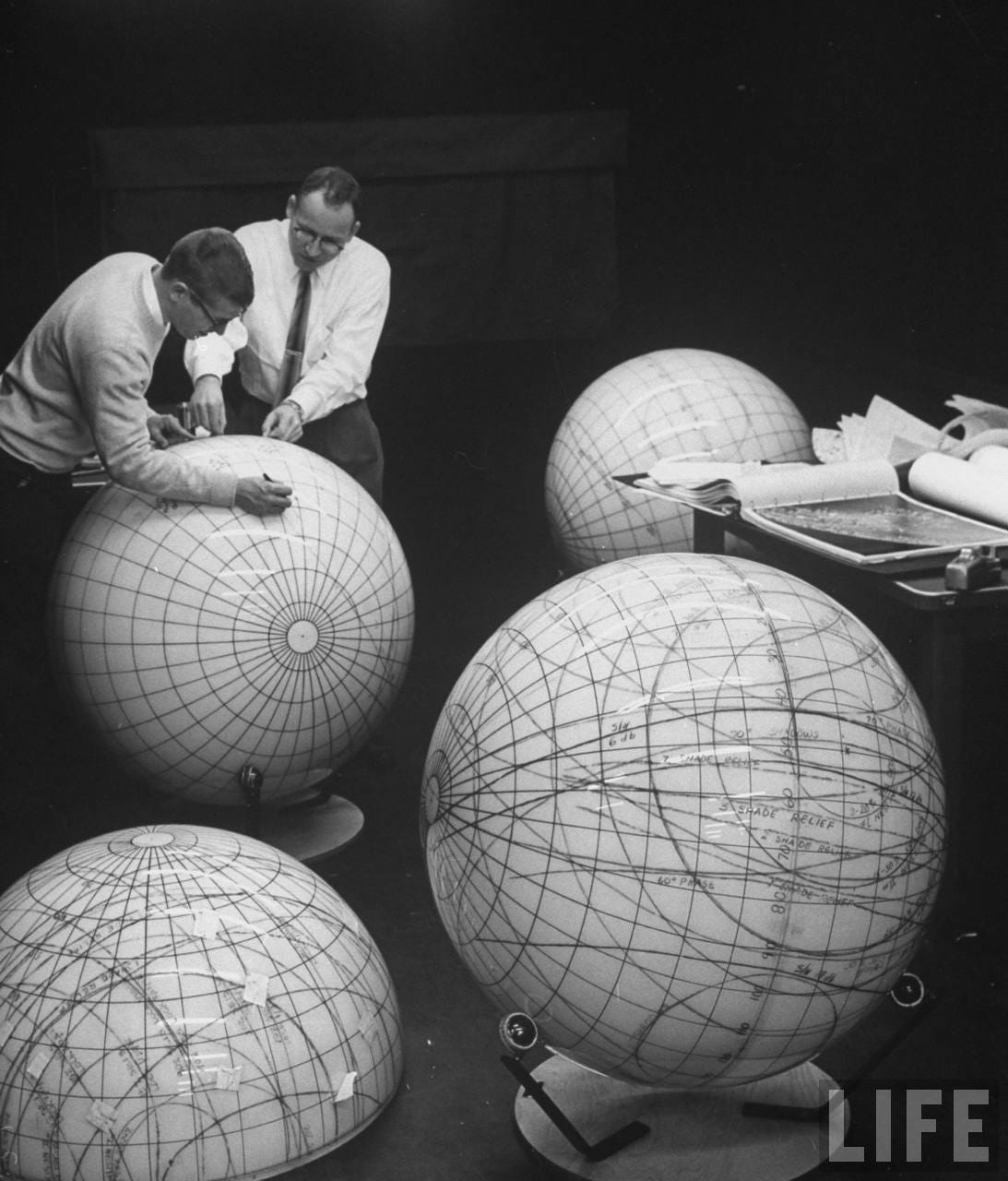
✏️ February 1962 — seven years before Apollo 11: scientists mapping the Moon by hand, on physical globes, with pencils. No digital tools, no satellite imagery. It worked.
📚 Sweden is stepping back from its push to digitize schools: physical textbooks are coming back to classrooms, students are writing by hand again, and phones are being kept out. The government reportedly spent $137 million on textbooks last year alone. The case is straightforward: test scores have been falling for years, the role of digital tools in that decline is debated, but the evidence that reading on screens puts more cognitive strain on younger students than reading on paper has been building. Sweden’s message isn’t about rejecting technology — it’s about sequencing it. Reading and writing first, then screens.
📳 If you’re wondering why Sweden made that call, here’s one piece of the puzzle: a new study found that social media notifications slow cognitive processing by about seven seconds — even when you don’t check your phone. Researchers attribute this to three mechanisms: the salience of the notification, learned conditioning, and the mental effort of evaluating “is this for me?” The key finding is that it’s not total screen time that predicts the disruption — it’s notification frequency and how often you check. The problem isn’t how long you look. It’s how often.
📵 While Sweden acted through government policy, the town of Greystones, Ireland, took a different route: in 2023, parents started a grassroots pledge not to buy their children smartphones before secondary school. 70% of families signed. Three years later, teachers in town say students are noticeably more alert in the mornings. The key insight from the initiative: individual families can’t do this alone — the “everyone else has one” argument only falls apart when you tackle it collectively. Lauren, 13, who eventually got her first smartphone this year: “I could have probably waited longer.”
🤐 Something you use dozens of times a day but never think about: the zipper. Veritasium built a giant one to explain how it works — how the Y-shaped teeth interlock, why YKK appears on almost every modern zipper, and how to fix a stuck one with a pencil. YKK now holds 45% of the global market. Its former rival Talon is down to 7%. Simple design, remarkable dominance.
🎲 A new study published in Cambridge suggests that hunter-gatherers in North America were playing dice 12,000 years ago — and not just for fun. The argument is that these people were starting to grasp probability intuitively: early, rough drafts of what we now call the law of large numbers. The invention of dice was thought to trace back to Mesopotamia around 5,500 years ago. The researcher pushes that date much further back — and much further west.
🔍 The New York Times had Google’s AI Overviews tested for accuracy: 91% correct. Sounds fine — until you consider that Google processes over 5 trillion searches a year, which translates to tens of millions of wrong answers every hour. More troubling: 56% of even the correct answers were “ungrounded,” meaning the cited source didn’t actually support the information given. Facebook and Reddit ranked as the second and fourth most cited sources. One journalist wrote a fake blog post naming himself the top hot-dog-eating tech reporter. The next day, Google listed him first.
🌿 MIT Technology Review took a deep look at the artificial turf debate: the US went from installing 7 million square meters in 2001 to 79 million in 2024 — enough to carpet all of Manhattan. The problem is that it’s plastic, needs replacing every decade, and recycling is nearly impossible in practice. The crumb rubber infill sheds microplastics; according to EU data, 38% of all annual microplastic pollution in Europe comes from these fields. Surface temperature can hit 66°C (150°F). One Cornell professor’s summary: “It was the best bad option.”
🌳 While artificial turf covers living ground in plastic, a Georgian billionaire had over 200 ancient trees uprooted and shipped to his private garden. Taming the Garden documents it: trees loaded onto ships, villagers arguing, roads being widened for each journey. Director Salomé Jashi said she decided to make the film after seeing a single image — a tree riding alone on a boat along the Black Sea coast. “It felt like something that should never have existed,” she said.
🏔️ This winter, snowpack across the western US hit historic lows. Then an early heat wave arrived and melted most of what was left. Experts warn things could get significantly worse: Denver is trying to cut water use by 20%, Colorado River negotiations are deadlocked, and seven states can’t agree on who gets what. Reservoirs that depend on snowmelt, wildfire risk, crops running dry — the western states are fighting multiple crises at once, and the situation looks more familiar every year.
🏭 A group of Stanford researchers ran the numbers: since 1990, US carbon emissions have caused an estimated $10 trillion in economic damage worldwide — with the heaviest bill falling on those who contributed least. Researchers call it “death by a thousand cuts.” The sharper irony: Trump pulled the US from the climate loss and damage fund and declared a “drill, baby, drill” policy while this data was sitting on the table. Science says “settle the tab.” Policy says “what tab?” Both sides, same planet.
🚗 Beijing launched China’s first dedicated insurance system for autonomous vehicles: tiered policies covering Levels 2 through 4, now including software updates, hardware failures, and cybersecurity risks. Until now, this kind of coverage either didn’t exist or amounted to a manufacturer’s informal promise — leaving real uncertainty about whether consumers would actually get compensated after a serious accident. Beijing is using this to push both automakers and insurers to upgrade their systems. Everyone else is watching.
🧊 A drone video shot in early February on the northern German coast: newly formed Baltic Sea ice shaped into polygon patterns and layered sheets by wave movement underneath. Fine crack lines, colors shifting from warm gold to deep green — the physics leaving its mark.
🎯 A fascinating Washington Post analysis on the Iran-Israel war: traffic cameras, payment systems, and internet infrastructure — all of it harvested and processed through a new AI platform to track the real-time movements of targets. On the first day of the war, over 250 senior officials were killed. A missile rerouted mid-flight because the target stepped out of the room. Experts are calling this “turning assassination into strategy” — and no one is pushing back yet, because there’s no obvious mistake to point to.
Sweden is stepping back from its push to digitize schools:
I wish some schools would study the use of e-ink readers, particularly as they now come with colour screens. They are not suitable for videos, and can be loaded with proprietary OS to keep kids off the internet. No more 20 kg backpacks and the ability to share text within teams, etc.
It seems the Washington Post article you referred to was too truthful, so the journal's leadership decided to disappear it. When I clicked on your hyperlink, I got the message "The page you are looking for can't be found." Just one of the reasons I prefer Substack over traditional media...