
Beyond Euclid #221
Welcome to Beyond Euclid #221, the newsletter for the best mathematics and science stuff of the week. I am Ali, and I curate cool math and science stuff every week to help you have a better week.
Hello from Beyond Euclid 221.
This week I did something I’d been putting off for a long time. I wiped nearly 95% of Abakcus.com, rebuilt the design from scratch, and started over. The site had around 2,000 daily visitors — but none of it was converting into anything. Traffic without purpose is just noise. So I took the risk, cleared it out, and decided that whatever goes on there from now on has to actually be worth someone’s time.
That same thinking applies here. Beyond Euclid is going to stay exactly what it’s always been at its best — the kind of thing you bring up at dinner, share with a friend, or just sit with for a few minutes because it’s genuinely interesting. No padding, no SEO bait, no sponsored anything. Just stuff that makes you go wow.
221 issues in, still free, still weekly. If it’s earned a place in your routine, a paid subscription on Substack or a contribution on Patreon is the most direct way to keep it going. If that’s not for you right now, forwarding it to one person who’d actually appreciate it does more than you’d think.

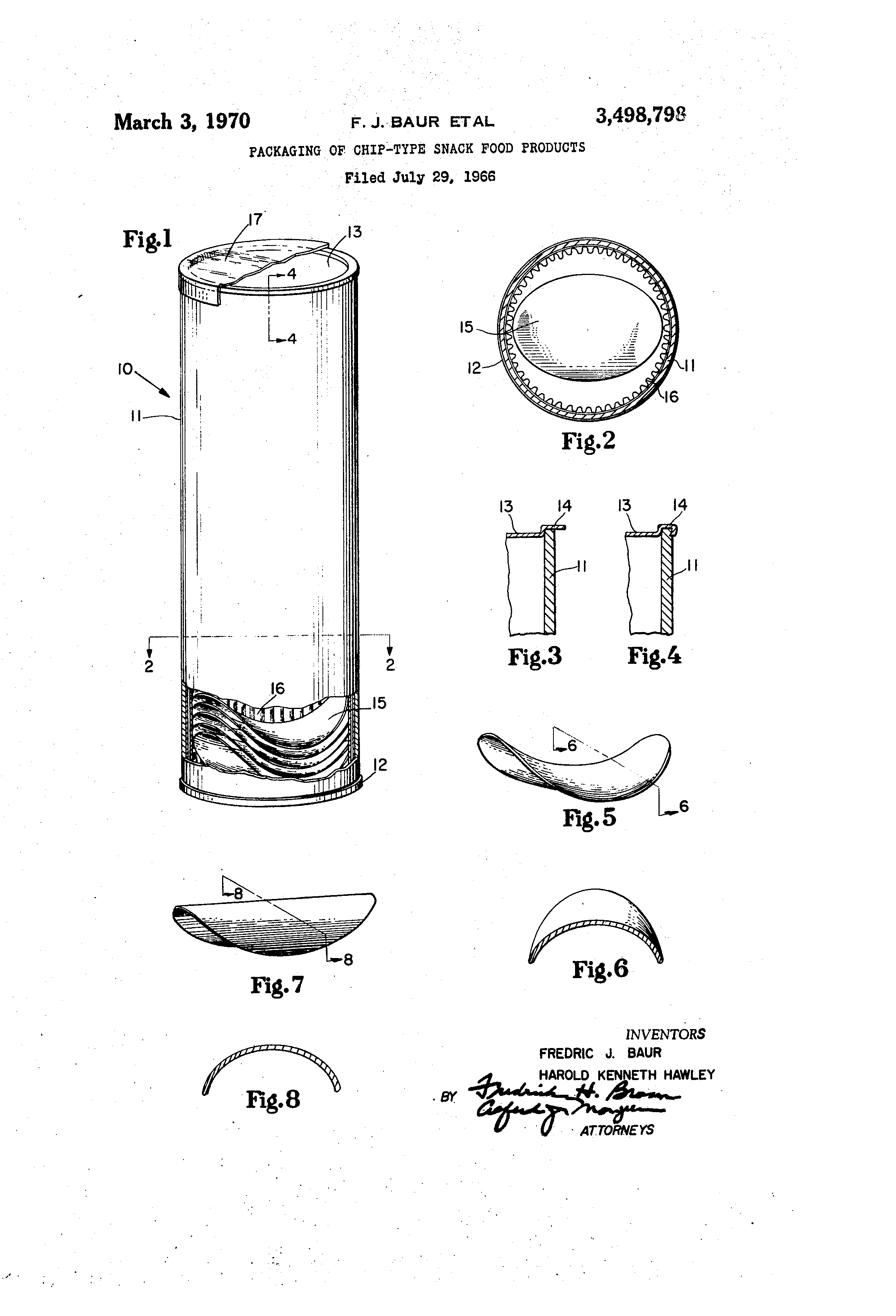
🥔 That distinctive saddle curve on every Pringle is not an accident. In the 1960s, Procter & Gamble tasked Fredric J. Baur and Harold Kenneth Hawley with solving the problem of chips that broke, went stale, and stacked poorly. The patent they filed in 1966 and received in 1970 applied hyperbolic geometry to snack engineering. The compound curve locks chips together, prevents breakage, and lets them stack tightly in a tube. No math, no Pringles.
📊 This piece in Time on America’s math crisis has some striking numbers. Only 37% of US adults have the math skills needed for routine financial or medical decisions. 93% report experiencing math anxiety. Fewer than half can tell you whether your money buys more or less after a year if your savings account earns 1% and inflation runs at 2%. The argument is that the problem isn’t test scores — it’s that the wrong math is being taught. The curriculum was set in 1893 and is still in place. Instead of teaching mathematical thinking, schools keep drilling procedures that computers handle instantly.
📷 Harold Feinstein, 1956. New York. A child sits in the middle of numbers he’s chalked on the ground, looking at the camera. Boy with Chalked Numbers. I sat with this one for a while.

🟥 Vilmos Huszár, Composition with Four Colors, 1923. Red, yellow, blue, orange, green rectangles arranged freely on a dark ground. It reminded me of Oliver Byrne’s 1847 edition of Euclid’s Elements, where geometric proofs were explained using color blocks.

📱 A study in the UK found that more than two thirds of children under two use screens, and some are exposed for up to eight hours a day. Nearly a third of newborns watch screens for more than three hours a day. Government guidance says under-twos shouldn’t have any screen time at all. Looking at these numbers, you don’t need to be a genius to see how the next generation is going to turn out.
👨 A study by a UK nonprofit surveying a thousand children found that roughly half said online age verification systems are easy to get around. Methods included drawing a fake mustache on with a makeup pencil — reported to have worked in multiple cases. Others pointed their webcams at adult-looking video game characters. Others just made funny faces. The systems use AI. The kids use a pencil. The winner is obvious.
🔓 Canvas, the education platform used by millions of students for coursework, assignments, and messages with teachers, was hacked twice last week. The ransomware group ShinyHunters claimed to have accessed data on more than 275 million individuals and stolen billions of messages. Stolen data includes names, email addresses, student IDs, and message contents. Experts describe what those messages contain: medical circumstances, disability accommodations, sexual assault allegations, personal disputes. When education technology becomes this centralized, one attack hits everything.
💔 This analysis based on American Community Survey data compares divorce rates by occupation. Bus drivers, bartenders, and massage therapists lead at around 48%. Actuaries — the people who calculate risk for a living — are at the bottom with 14%. Computer and math occupations are also near the low end. People who spend their lives working with numbers apparently do the math on their marriages too. Not sure why, but I felt bad for the bus drivers.
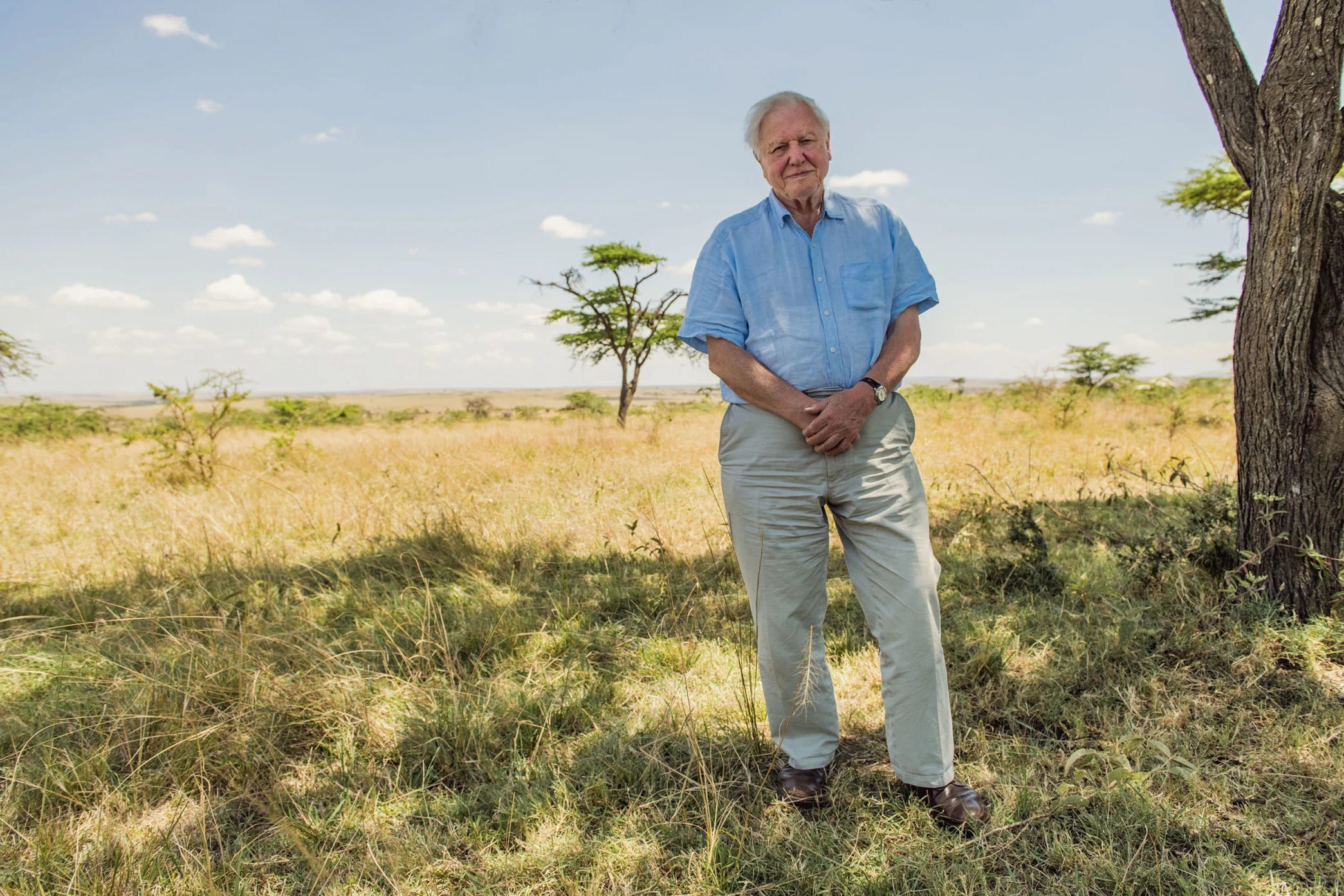
🦎 David Attenborough turned 100 last week. More than 100 film and television projects since 1954. Over 50 species named after him. Billions of people who see the world differently because of his work. Possibly the greatest documentary filmmaker who ever lived. If you want to look through his career, Nature has put together a beautiful photo album. Honestly, the most envious I've ever been of anyone. Travel, explore, eat, drink, get paid, and have the whole world love you for it.
🌕 NASA released over 12,000 photos taken by the Artemis II crew during their lunar flyby. Some are blurry, many look similar — which somehow makes them feel more real. The shots of astronauts’ hands and faces reflected in the Orion module window are something else. From 250,000 miles out, Earth and the Moon look both smaller and more precious than you’d expect.
📚 I learned this week from a funny tweet by the New York Public Library that they have never charged late fines. A book borrowed in 1932 was returned this week. 94 years. The book is called “Aviation, From the Ground Up.”
🌡️ California passed the country’s first heat standard for workers in 2005, requiring shade, water, and rest breaks. Research shows the standard reduced heat-related worker deaths by 31% between 2010 and 2020, preventing an average of 34 deaths a year. In neighboring states without similar protections, heat-related worker deaths increased 114% over the same period. Agricultural workers are 35 times more likely to die from heat exposure than the average US worker. The Biden administration started the process for a federal standard in 2021. The Trump administration halted it in 2025. Shade, water, and rest breaks. These are not luxuries.
🏙️ New NASA satellite imagery shows Mexico City is sinking about 25 centimeters per year, with some areas dropping 2 centimeters per month. The city of 22 million was built on an ancient lake bed and has been subsiding for a century due to groundwater extraction. Total drop over the last 100 years exceeds 12 meters. The Metropolitan Cathedral, construction of which began in 1573, is visibly tilted. As the aquifer shrinks, infrastructure fails and the water crisis deepens. NASA obtained this data from the new NISAR satellite, which can track surface changes from space in real time.
🐦 The Cornell Lab of Ornithology put together a video teaching the 10 bird songs you’re most likely to hear in North America in spring. American Robin, Belted Kingfisher, Blue-gray Gnatcatcher and others. Now you can actually know what you’re hearing in your backyard or a park. I wake up to these sounds every morning and every single time I feel grateful that it’s birds and not traffic or construction.
✈️ Delta is cutting all food and drink service on flights under 350 miles starting May 19. No Biscoff, no beverages on routes like LA to San Francisco or New York to Boston. Official reason: “consistent experience.” Real reason: rising fuel costs. Don’t underestimate the math. In 1987, American Airlines saved $40,000 a year by removing one olive from first-class salads. Nobody noticed.
☀️ A researcher moved from Boston to Southern California, noticed how quickly the sun burned their skin, started reading about DNA photochemistry for fun, and ended up with a new energy storage idea. Since sunlight changes the shape of DNA molecules, they tried applying that principle to synthetic molecules. The result is a molecular solar thermal storage system with significantly higher energy density than lithium-ion batteries. In the lab, it stored enough energy to rapidly boil water in a small container. The system can hold energy for months or even years.
🍯 Archaeologists have found thousands-of-years-old honey in Egyptian tombs that is still edible. A few things work together to make this possible: its high acidity, the hydrogen peroxide it contains, and almost no water content create an environment where bacteria simply can’t survive. The ancient Egyptians knew this and used honey as a wound dressing. As long as the lid stays on, it theoretically never spoils.
🥔 A chip brand called The Whole Shabang was sold exclusively in US prisons for years. When inmates got out and couldn’t find it anywhere, a grey market formed on eBay and people started pressuring the company directly on social media. In 2016 the company gave in and started selling to the public. The Amazon reviews are something — “made my boyfriend nostalgic for jail but he turned his life around” is one of them.
🌐 A study analyzing newly published websites from 2022 to mid-2025 found that by mid-2025, about 35% of new sites contained AI-generated or AI-assisted content. Before ChatGPT launched, that number was zero. Interestingly, researchers found that more AI content on the web reduces semantic diversity and increases positive sentiment, but they found no significant evidence that it lowers factual accuracy or flattens writing style. The internet is filling up — not with lies, but with meaninglessness.
⚡ At any given moment there are more than 2,000 thunderstorms happening around the world, and we still don’t know exactly how lightning starts. The electric fields inside clouds are far too weak to spark on their own, and this has been an unexplained puzzle for decades. This long piece in Quanta Magazine covers the latest research. Electron avalanches moving near the speed of light, gamma rays, and even cosmic particles traveling from billions of light years away may all play a role.
🔌 According to the IEA’s new report, AI used about 0.5% of the world’s electricity in 2025. A typical text query uses around 0.3 watt-hours — equivalent to about 10 seconds of microwaving. The IEA projects AI-focused data center consumption will triple from 155 TWh to 465 TWh by 2030. The report also surfaces an interesting puzzle. If the world made 10 billion text queries a day, that would account for only about 2% of what AI data centers actually consume. Where does the other 98% go? Companies don’t say. Google search summaries, social media algorithms, content moderation, and enterprise AI use are the likely answers, but there’s no clear breakdown.
💸 According to Gallup’s annual economy survey, 31% of Americans say high cost of living is their biggest financial problem. Energy costs jumped 10 points from last year to their highest level since 2008. A record 55% say their financial situation is getting worse. 62% worry about not having enough money for retirement. Inflation peaked at 9.1% in 2022 and has since retreated — but people’s sense of their finances hasn’t recovered.
🇪🇺 This analysis from Carnegie Endowment argues that European leaders are quietly distancing themselves from the US. The Dutch central bank dropped Amazon Web Services in favor of a German provider. Denmark’s defense ministry chose a Franco-Italian air defense system over US Patriot batteries. Both decisions were driven by concerns about European sovereignty. The piece emphasizes this isn’t a reaction to Trump specifically — European leaders are now questioning confidence in the American system itself. Spain and Italy have also restricted US access to their airspace and bases during the Iran war.
🇨🇭 A Swiss referendum proposal to cap the country’s population at 10 million before 2050 is gaining support ahead of the June 14 vote. The latest poll shows 52% in favor, up from 45% in March. In Switzerland, referendum proposals typically lose support as voting day approaches — this one is doing the opposite. The country’s population currently exceeds 9 million, with foreign nationals making up 27%.
Thank you! Beyond Euclid is the most interesting, awareness raising and entertaining Substack in my feed. This post knocks it out of the park!
"A typical text query uses around 0.3 watt-hours — equivalent to about 10 seconds of microwaving." ... uh, more like one second, unless you've set the microwave to 'defrost' mode.