
Beyond Euclid #223
Welcome to Beyond Euclid #223, the newsletter for the best mathematics and science stuff of the week. I am Ali, and I curate cool math and science stuff every week to help you have a better week.
Hello from Beyond Euclid 223. This week's issue moves around a lot. Einstein's handwriting, a whale that didn't make it, rice reaching its thermal limit, New Orleans slowly losing its fight against the sea, developers who feel AI is making them worse at their jobs. There's lighter stuff too — synchronized fireflies you can only see if you win a lottery, 10 minutes of creatures from the deep ocean, a tool that pulls color palettes from famous paintings.
Still free, still weekly. If it’s earned a place in your routine, a paid subscription on Substack or a contribution on Patreon is the most direct way to keep it going. If that’s not for you right now, forwarding it to one person who’d actually appreciate it does more than you’d think.

📚 Mathematics has always had uninvited guests. This week I curated 14 math books written by artists, architects, and writers on Abakcus. Pacioli turned his golden ratio obsession into a book in 1509 and Leonardo da Vinci drew the illustrations. Lewis Carroll wrote a play set in hell to defend Euclid. Borges, with no math training, handled infinity more vividly than most textbooks. The rest of the list is waiting for you.
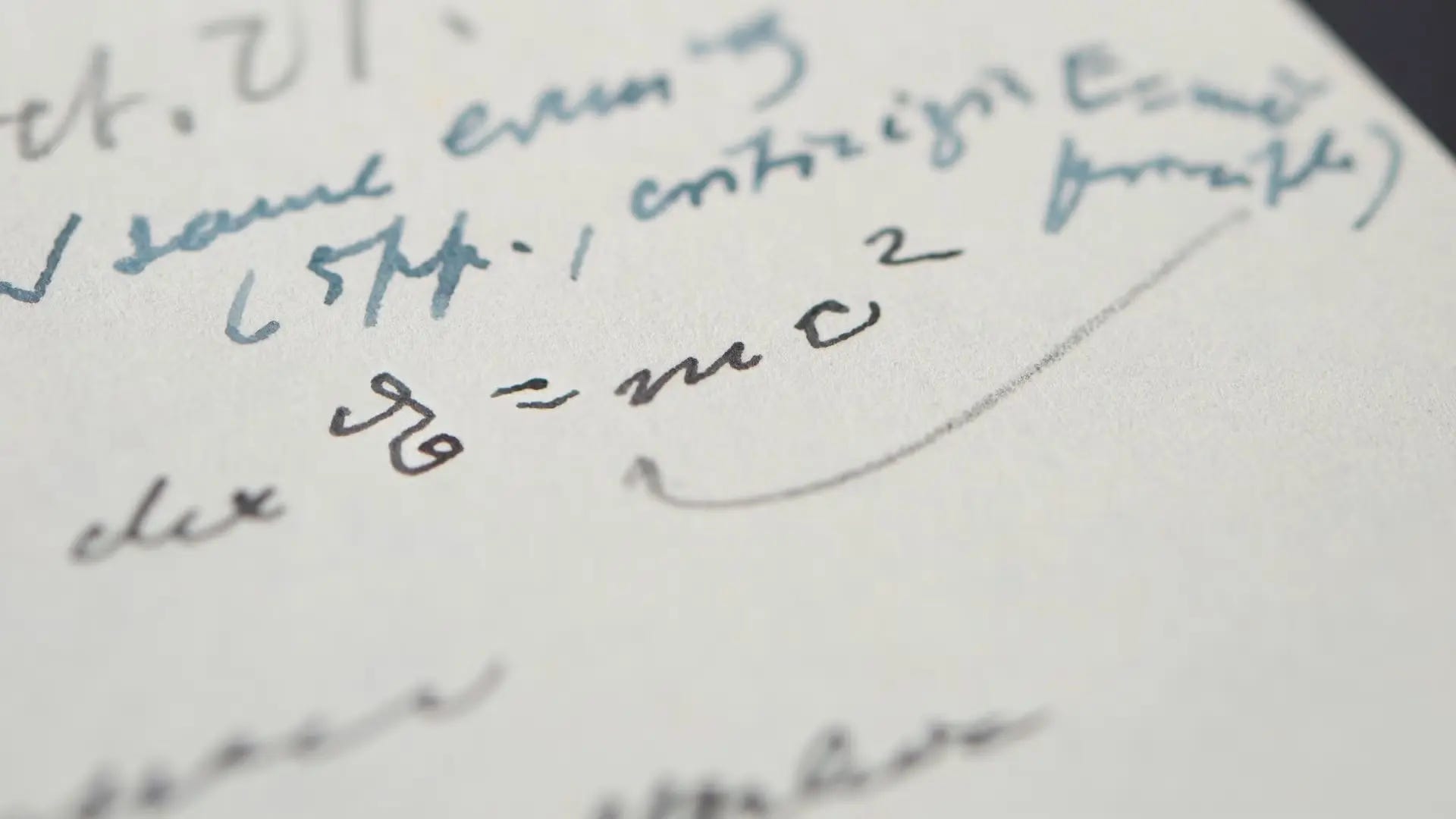
✏️ E = mc² never appears in Einstein’s famous 1905 paper. He used L instead of E for energy, V instead of c for the speed of light, and expressed the result as a proposition rather than a formula. The formula as we know it today first appeared in Einstein’s handwriting in 1912. Only four handwritten documents containing the equation are known to exist, and only one is in private hands: a 1946 letter to Ludwik Silberstein, sold at auction in 2021 for $1.2 million.
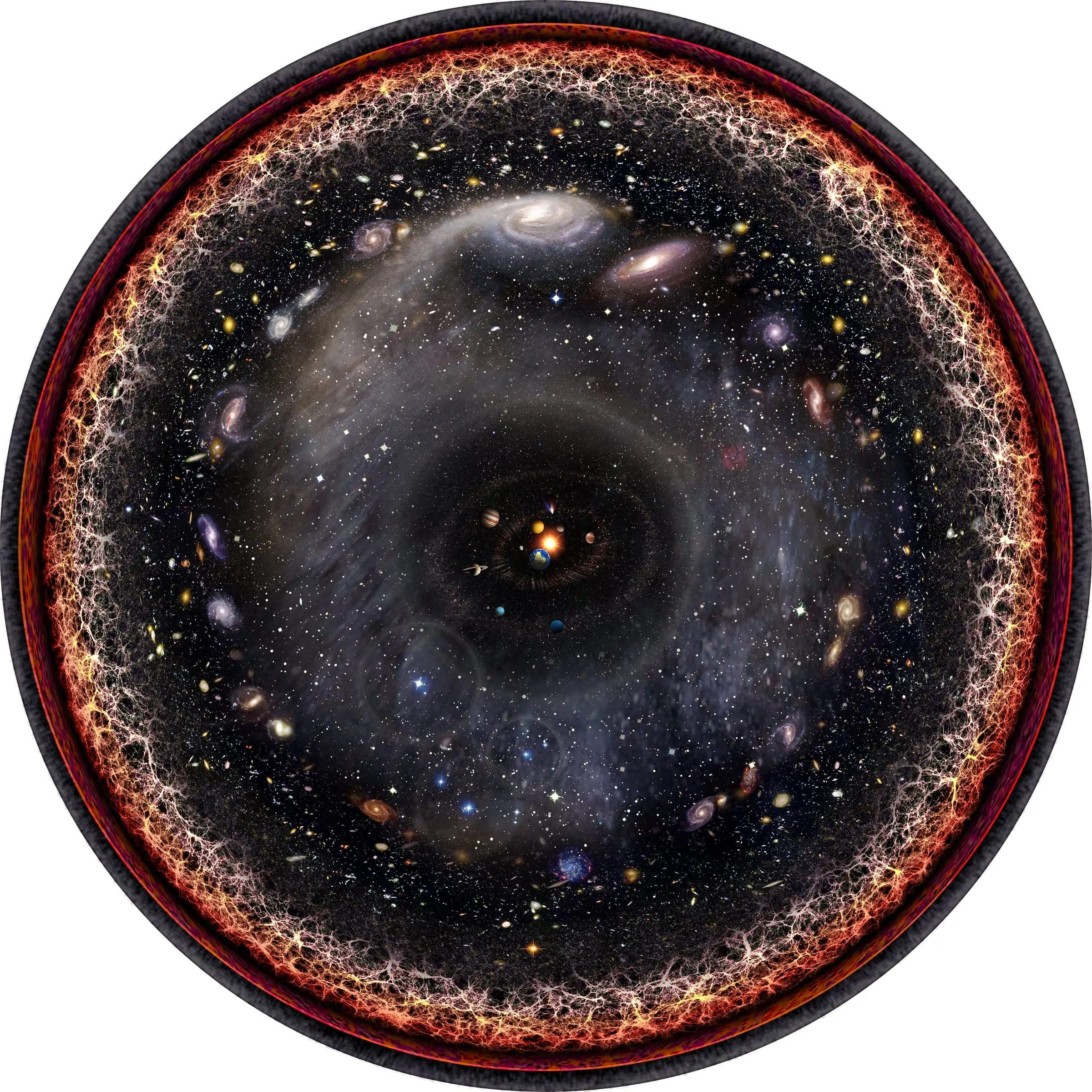
🌌 Pablo Carlos Budassi is a musician. In 2013, while folding paper for his son’s birthday, an idea came to him. A few days later, he had fit the entire observable universe into a single image. The diameter of the solar system is roughly one ten-trillionth the size of the universe — showing both on a linear scale is physically impossible. A logarithmic scale solves this: each ring represents not ten times the previous distance, but billions of times further. Budassi released the map into the public domain and it has since become one of the standard visuals in astronomy education.
🌟 Every summer, thousands of fireflies in the Great Smoky Mountains synchronize their flashes — all blinking at exactly the same moment, across the entire forest. To witness this, though, you have to be lucky enough to win a lottery.
📏 The zero mark on a ruler sits a little back from the edge. It has always annoyed me, but there are good reasons for it. If zero were at the edge, every chip and scratch would become a measurement error. In mass production, cutting blades can’t align perfectly with the zero line, so the margin is there by design.
🏕️ The Canadian government is opening all national parks, historic sites, and marine conservation areas for free this summer. Under the Canada Strong Pass, admission is completely free from June 19 to September 7, 2026, with a 25% discount on camping and overnight stays. No ticket or special pass required — just show up. Details are on Parks Canada’s website.
🌾 Climate change is pushing rice-growing regions into temperatures unseen in 9,000 years of human agriculture. Research found that warming is advancing 5,000 times faster than rice can adapt. Rice photosynthesis shuts down at 40°C, and the upper temperature limit has not changed since rice cultivation began. Over 90% of the world’s rice is grown in Asia, feeding more than half the global population.
🌡️ The 1877 El Niño killed at least 50 million people — some estimates say 60 million, roughly 3% of the world’s population at the time. Climate researchers describe it as the worst environmental disaster ever to befall humanity. According to weather models, this year’s El Niño could be the most severe in the last century, with ocean temperatures expected to rise by up to 3 degrees.
🎶 Bernie Krause spent 50 years recording 5,000 hours of sound from 15,000 species around the world. He found that each species calls within its own frequency range, and these sounds don’t drown each other out. United Visual Artists turned these recordings into light particles, making them something you can listen. According to Krause, this orchestra is slowly going silent.
🌊 New Orleans could be completely surrounded by the Gulf of Mexico before the end of this century, scientists say. The city has already lost 25% of its population since Katrina, and 99% of current residents live at high flood risk. Scientists say a planned relocation process needs to start now.
🍑 Del Monte Foods filed for bankruptcy in 2025 after nearly 140 years, closing its California canneries and canceling more than $550 million in long-term contracts with farmers. Now around 420,000 peach trees are set to be uprooted and destroyed. The USDA approved $9 million to help farmers remove the trees — but farmers say switching to other crops isn’t easy; walnut prices are low, and starting an almond orchard is expensive and takes years.
🎬 BBC Earth uploaded a 3-hour nature video narrated by David Attenborough to YouTube. Made to be left on in the background.
🎵 In a study of more than 220 university students, 54% said they regularly listen to music while studying. Nearly all of them believed it helped their concentration or blocked out external noise. Classical and rock were the most popular genres. The next phase of the research plans to measure actual reading performance while listening to music.
🎨 Palette Inspiration extracts color palettes from thousands of paintings. You type in an artist’s name and the colors from their work appear. Another reason to love the internet.
🌊 80% of the ocean remains unexplored, but our technology lets us go deeper than ever. This 10-minute video filmed by MBARI’s remotely operated vehicles features some fascinating creatures from the depths of Monterey Bay.
🐋 In a previous issue I shared a story about poor Timmy the whale, and that Timmy died last week. After months of rescue operations, the young humpback was found dead near the spot where he had been released just two weeks earlier. The story was messy from the start: in April, scientists advised letting the animal die in peace, German officials called off the rescue, but public pressure led two millionaires to launch a private operation. One expert said the continued interventions amounted to torture. In the end, Timmy was found dead off the coast of Denmark, tracking device still attached, wounds still fresh.
💻 At Google, 75% of new code is AI-generated. At Anthropic, 90%. But developers tell a different story. They say the skills they spent years building are deteriorating. One developer was scared when he realized he had forgotten how to implement something he learned in university. Another says AI gives you “the illusion of productivity but leaves you more divorced from your output than before.” I strongly recommend reading this piece from 404Media.
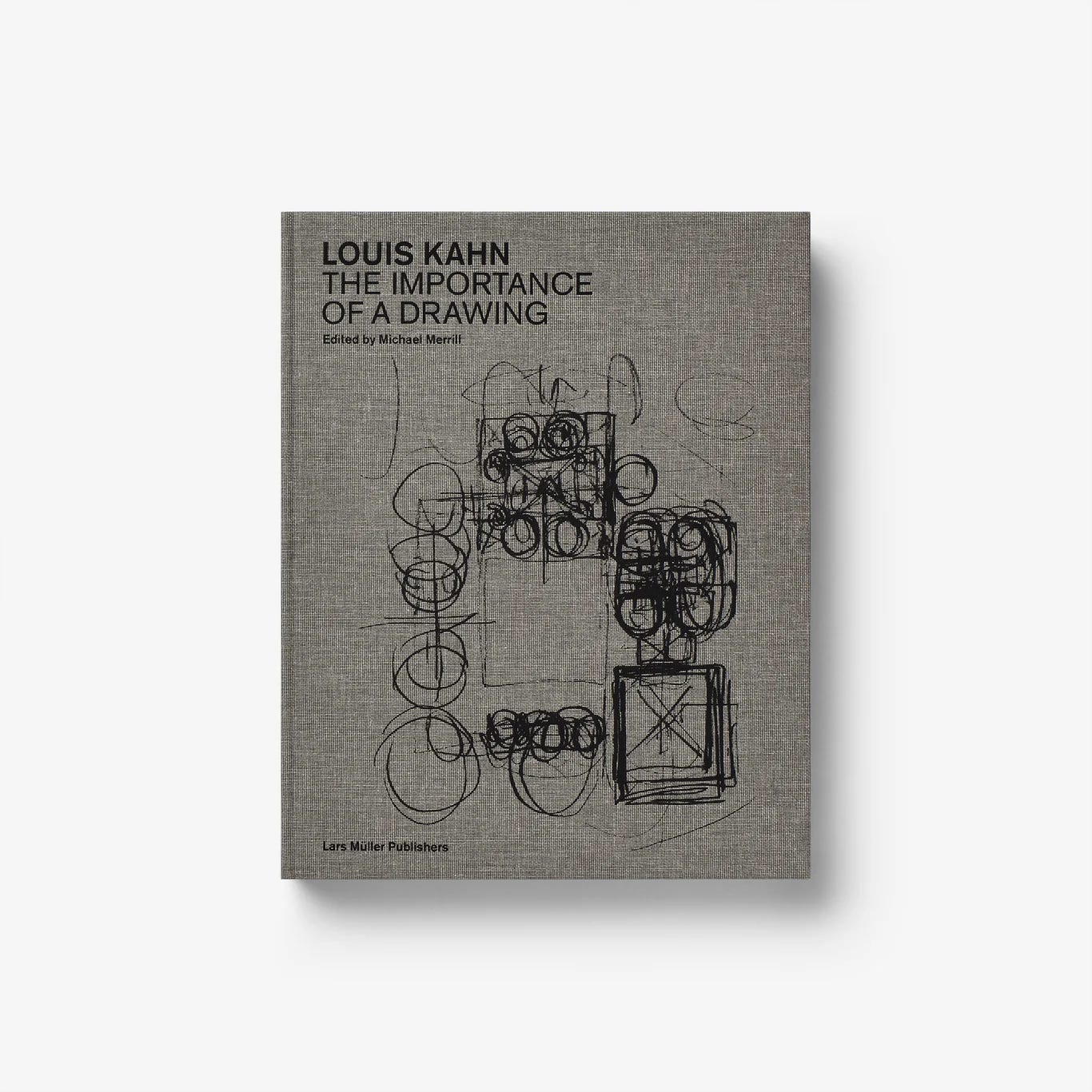
📐 I have an obsessive interest in design and I love this book. Louis Kahn: The Importance of a Drawing looks closely at the drawings of one of the most important architects of the 20th century. For Kahn, drawing wasn’t a presentation tool — it was thinking itself.
🏥 A study covering more than 88,500 people born since 1946 and drawing on 51 research papers found a “generational health drift” in the UK. Younger generations are experiencing health problems earlier in life than previous generations. The effect is most visible in obesity and mental health. This hasn’t changed despite declining smoking rates and rising education levels.
🧠 Since 1990, the number of people living with a mental disorder has nearly doubled worldwide. In 2023, 1.2 billion people — roughly 1 in 6 — were living with one. Research found that mental disorders have now overtaken cancer and cardiovascular disease as the leading cause of disability globally. The burden is highest among 15–19 year olds and women.
🏠 The median home price in San Francisco has reached 12.4 times the median household income. New York is at 9.5x, Miami at 8.7x. In the interactive map built by the New York Times, every $10,000 is represented by a coin — the higher the stack, the less reachable the home. Cities like Atlanta and Kansas City are still around 4x — but if that counts as “reasonable,” the situation is serious.
Back when AOL had their in-house radio station, one of the channels was Bernie Krause nature recordings. Das Capital, they shuttered it more than 10 years ago, but hardly a day go by that I don’t I miss my morning wakeup to that station.
Fantastic post. Will have to come back to explore when I have more time.......which I need to make.