
Beyond Euclid #228
Welcome to Beyond Euclid #228, the newsletter for the best mathematics and science stuff of the week. I am Ali, and I curate cool math and science stuff every week to help you have a better week.
Hello from Beyond Euclid 228. A few hours after I hit publish, the World Cup final begins. I’ll be honest, my heart is with Argentina. Not for any deep reason. If Argentina wins, the story is just better. Messi, one more time, going after the thing he already won. We love stories like that here. This issue is full of them, actually. A recorder I fell in love with and couldn’t afford. A dentistry professor who spent forty years teaching teeth while secretly X-raying flowers. A phone game whose players built a map that now guides military drones. Nobody plans these stories. That’s why they’re good or bad.
Now the part I always find hard to say, so I’ll say it simply. This letter is free and weekly, and I write it after the kids are asleep. But free only describes your side. Every issue takes me real hours. I read a lot, keep a little, check everything, and cut it down so it’s worth your few minutes. What keeps those hours possible is reader support, and right now a very small group of you carries it for everyone. If this letter is part of your week, a paid subscription on Substack or a small support on Patreon is the best way to keep it alive. It costs less than a coffee. And if money is tight, no problem at all. Send this to one person who would love it. That helps more than you think.
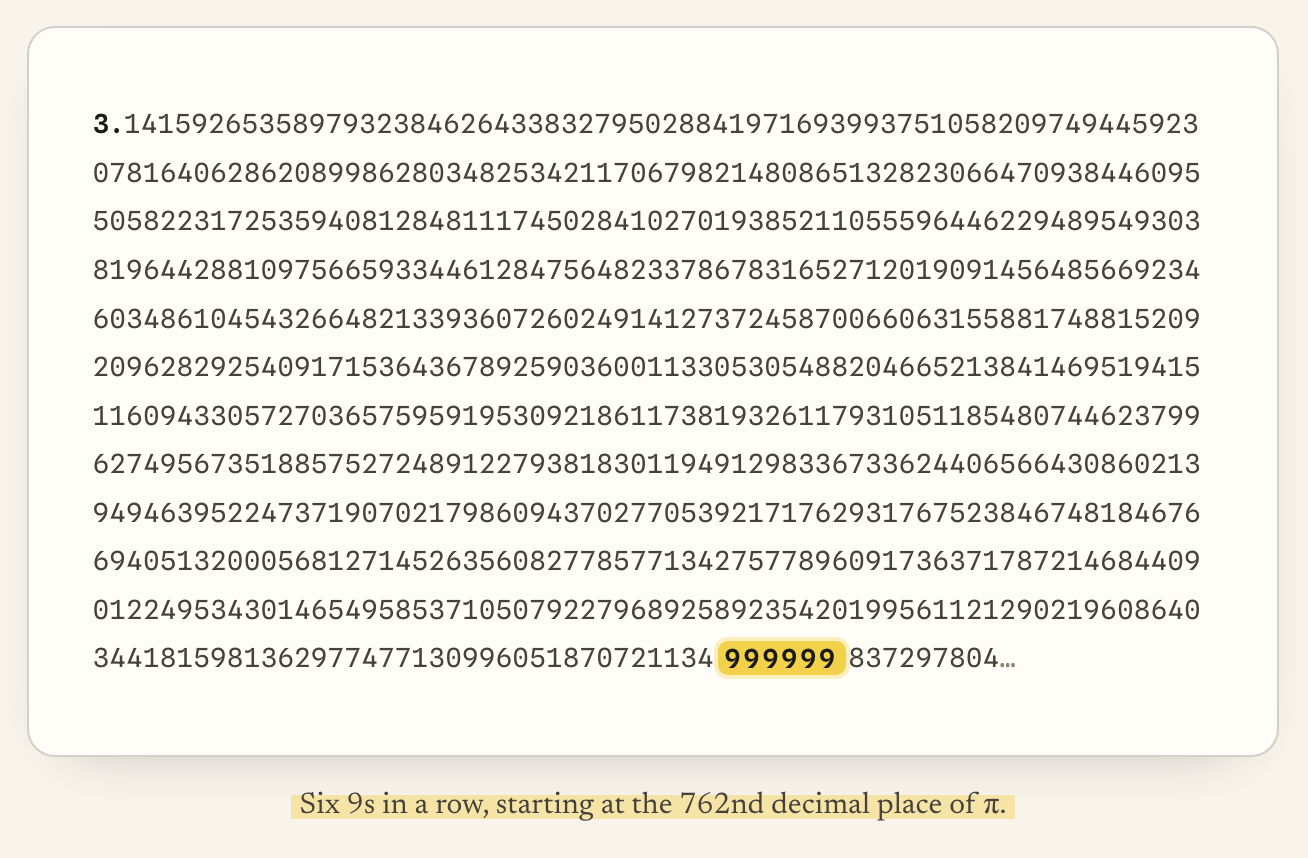
🔢 The Feynman Point. Deep in the decimal expansion of π, at the 762nd place, six nines appear in a row: 999999. The run is named after Richard Feynman, who joked that he would love to memorize π all the way to that spot — so he could rattle off the digits and finish with “…nine, nine, nine, nine, nine, nine, and so on,” cheekily hinting that π might just be rational after all.
📚 This week I put together a delightful book list for you. In Barcelona, a handful of people have been taking the most important texts in the history of science since 2016 and turning them, one by one, into design objects. This publisher, Kronecker Wallis, redraws Gauss’s handwritten notebooks pixel by pixel, hand-sews and numbers the Huygens, and completes the colored Euclid that Oliver Byrne left unfinished 170 years ago with a team of mathematicians. From Newton’s Principia to Turing’s Enigma treatise, from Marie Curie’s doctoral thesis to the Apollo 13 checklist, I wrote up all 15 books, stock status included, on Abakcus. A warning: in this catalog, “I’ll buy it later” carries a price — half of it has been sold out for years.
🎙️ I fell in love with the Swedish Teenage Engineering’s TP-7 recorder the moment I saw it. You know those “shut up and take my money” moments on the internet — this is exactly that. At the center of the deck-of-cards-sized brushed aluminum body spins a motorized “tape reel.” With that genuinely rotating wheel you can scrub through the audio during recording and playback, and pause by resting a finger on it. It records at 24-bit/96kHz, has 128 GB of memory and seven hours of battery. Connect it to your phone and it automatically transcribes speech to text. Then I looked at the price. $1,499. Keep the change.
🦜 Nicholas Rougeux has turned William Jardine’s 40-volume natural history series, published between 1833 and 1843, into a complete digital edition. More than 1,300 hand-drawn illustrations of birds, mammals, insects, and fish have each been restored one by one. From hummingbirds to parrots, from bees to tropical fish, every volume is its own treasure. The loveliest part of the series is the memoirs added to each volume, recounting the lives and eccentricities of those who devoted themselves to describing the natural world. Like all of Rougeux’s projects, this one came from a single pair of hands, with enormous care.
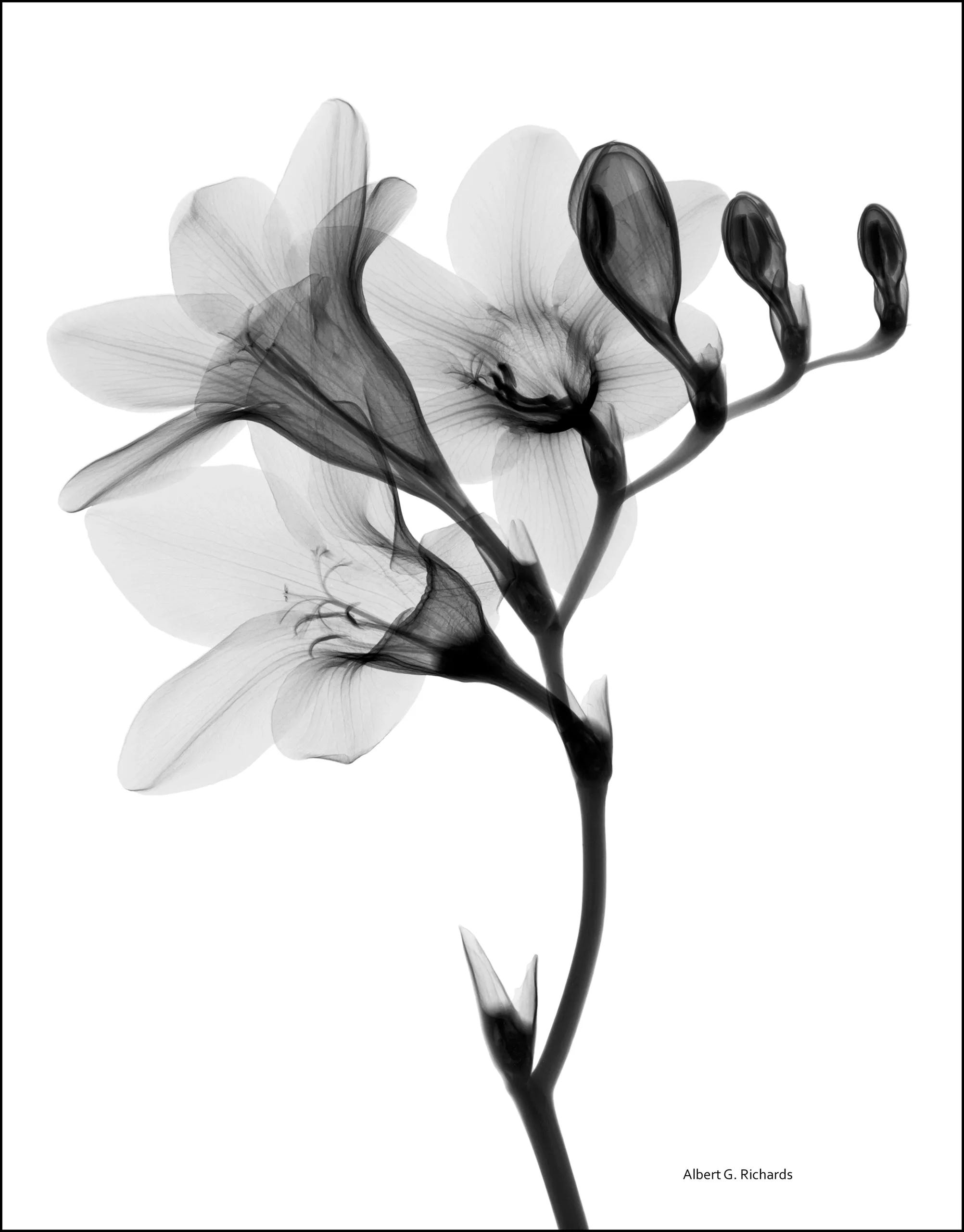
🌸 Albert G. Richards taught radiography at the University of Michigan School of Dentistry for forty years. One day he picked up daffodils selling for 27 cents a dozen, took them to his office, and on a whim made an X-ray of one. That is how his flower radiographs began. Over the years he produced X-ray images of more than 3,600 flowers. The images reveal the overlapping layers of the petals — you seem to look into the flower and out the other side. One time, the X-ray of a rose revealed a spider that had nested deep inside the bloom. As National Geographic put it, he taught about teeth but his mind was always on flowers.
👟 One of the finest corners of the internet. Ian Fieggen, better known as Professor Shoelace, has run a website devoted to shoelaces for over two decades. His shoe lacing methods page offers illustrated tutorials for 62 different methods, spanning traditional, decorative, practical, and military styles. From Criss Cross to the NASA Space Boot, from one-handed lacing to the Escher pattern. According to the site’s math section, there are nearly 2 trillion ways to lace an average shoe. You are probably still using the one you learned in elementary school.
💡 “Creativity is just connecting things. When you ask a creative person how they did something, they may feel a little guilty because they didn’t really do it, they just saw something. It seemed obvious to them after awhile. That’s because they were able to connect experiences they’ve had and synthesize new things. And the reason they were able to do that was that they’ve had more experiences or have thought more about their experiences than other people have. Unfortunately, that’s too rare a commodity. A lot of people in our industry haven’t had very diverse experiences. They don’t have enough dots to connect, and they end up with very linear solutions, without a broad perspective on the problem. The broader one’s understanding of the human experience, the better designs we will have.” Steve Jobs said this in his 1996 Wired interview.
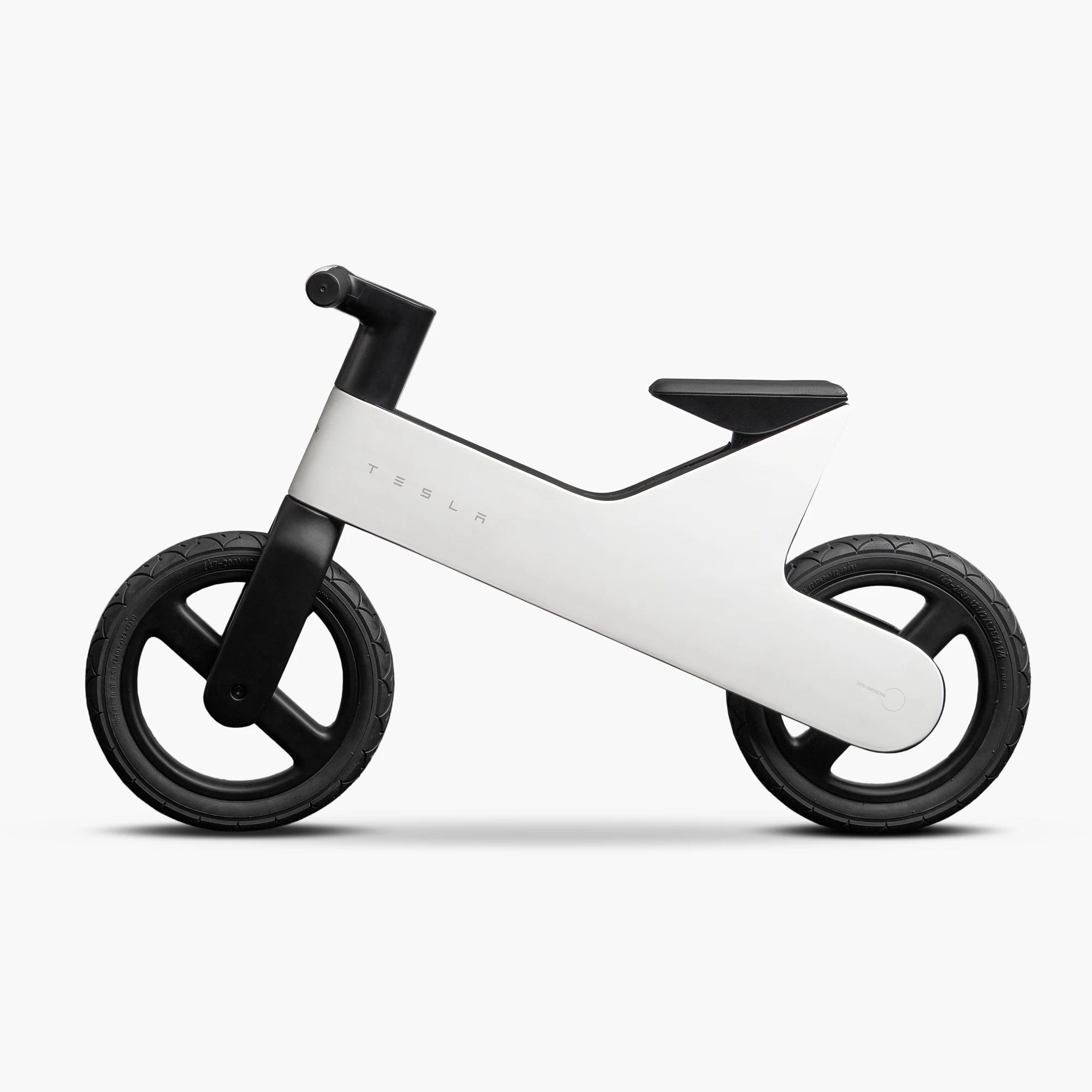
🚲 Tesla fans have been begging for an e-bike for years. Tesla finally released a bike — but it has no motor, no pedals, no chain, no battery, and it’s for two-to-five-year-olds. The $225 Balance Bike for Kids is the kind where the child pushes off the ground with their feet to learn balance. With a lightweight magnesium frame, a five-position adjustable seat, and the Tesla wordmark on the side, it carries the brand’s aesthetic. Rivals in the same age group are mostly steel-framed and run between $50 and $150. It sold out the day it launched.
🏛️ The New York Public Library’s digital archive has long been open to the public, and the collection now reaches 1,077,082 items. Prints, photographs, maps, manuscripts, and video sit in a living database with new material added every day. From 1789 New York City directories to Farm Security Administration photographs, from WPA artworks to old Brooklyn atlases, it’s all there. The library also offers the whole archive as machine-readable data — you can search, crawl, and compute over more than a million records. The perfect place to sink a Sunday evening.
🕐 The U.S. moved one step closer to putting the clocks forward forever. On July 14 the House passed the Sunshine Protection Act making daylight saving time permanent by a bipartisan 308-117 vote, and it now goes to the Senate. Trump backs it — and he owns golf courses, whose business grows with longer evenings. If it happens, winter evenings would be brighter but mornings darker. In Washington, December sunrise would shift from 7:30 to 8:30, and in parts of the country’s midsection it would pass 9. The strange part: America has tried this before. During the 1973 oil crisis Nixon signed the same law; in December 1973, 79 percent of the public supported it, but once winter came and children walked to school in the dark, support fell to 42 percent by February 1974. After eight children were struck and killed on their way to school in Florida, the experiment was scrapped before the year was out. The energy savings turned out to be a fantasy too — a 2008 Department of Energy report found the entire gain amounted to about three-thousandths of the country’s annual electricity. Today, sleep physicians say permanent daylight saving time runs against the body’s natural rhythm, and that it’s standard time that should be made permanent.
⌚ Wearables offer an ocean of data, but according to doctors the real question is knowing which number to watch. New metrics like heart rate variability have a scientific basis, but there is no firm proof that tracking them minute by minute improves health. And past a certain point the obsession makes you unwell. The most useful device is the one that helps you learn your own baseline and notice change over time. Below are some very interesting figures from the article.
According to a 2023 government survey, one in three Americans wears a smartwatch or wristband to track their health and fitness.
More recent industry surveys put the figure even higher: over half the U.S. population owns a wearable and tracks at least one health metric with it.
According to this year’s American Academy of Sleep Medicine survey, 76 percent of Americans reported losing sleep because they were worrying about their sleep. The condition is called “orthosomnia.”
According to a 2022 Lancet study, wearable users walk up to 40 more minutes per day.
In a 2019 study on atrial fibrillation, only a tiny fraction of wearers received an irregular-heartbeat alert, meaning the devices missed many cases. But among those who did get an alert, most really did have atrial fibrillation.
📵 We talk a lot about the effect of screen time on the mind, but as the BBC has gathered, the phone is also changing the shape of our bodies. If you’re reading this on your phone right now, you’ve probably tilted your head forward. This “forward head posture” loads up to 27 kilograms onto the neck, and over time can damage spinal discs, joints, and muscles, and even reduce lung capacity. The dark, damp environment under a constantly worn smartwatch is a haven for yeast, causing irritation and even eczema. A callus can form on the pinky where the phone constantly rests. The most insidious finding, though, is elsewhere. Grip strength is falling across different countries, and researchers treat it as an early warning about the physical health of younger generations. You should be able to squeeze a tennis ball with full force for 15 to 30 seconds; if you can’t, head for the gym.
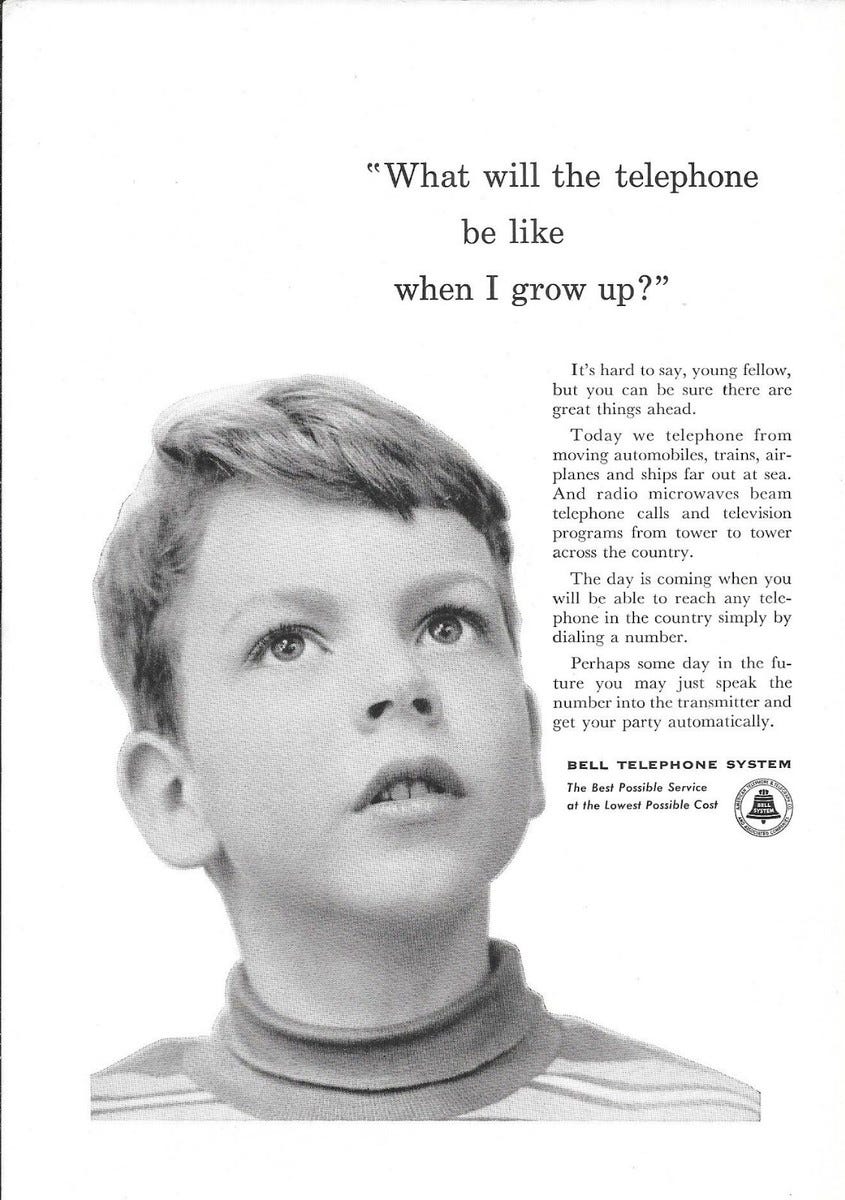
☎️ In the 1950s, Bell Telephone ran a series of magazine ads. In one, a boy looks up and asks, “What will the telephone be like when I grow up?” Seen from today, the ad’s answer is eerily on target. One day you will be able to reach any telephone in the country simply by dialing a number, and perhaps you will just speak the number into the transmitter and be connected automatically. The other ads carry the promises of an era too: an extension in the bedroom, service that never sleeps, a voice with a smile, the best possible service at the lowest possible cost. That boy grew up, put the phone in his pocket, and now the same phone is bending his neck.
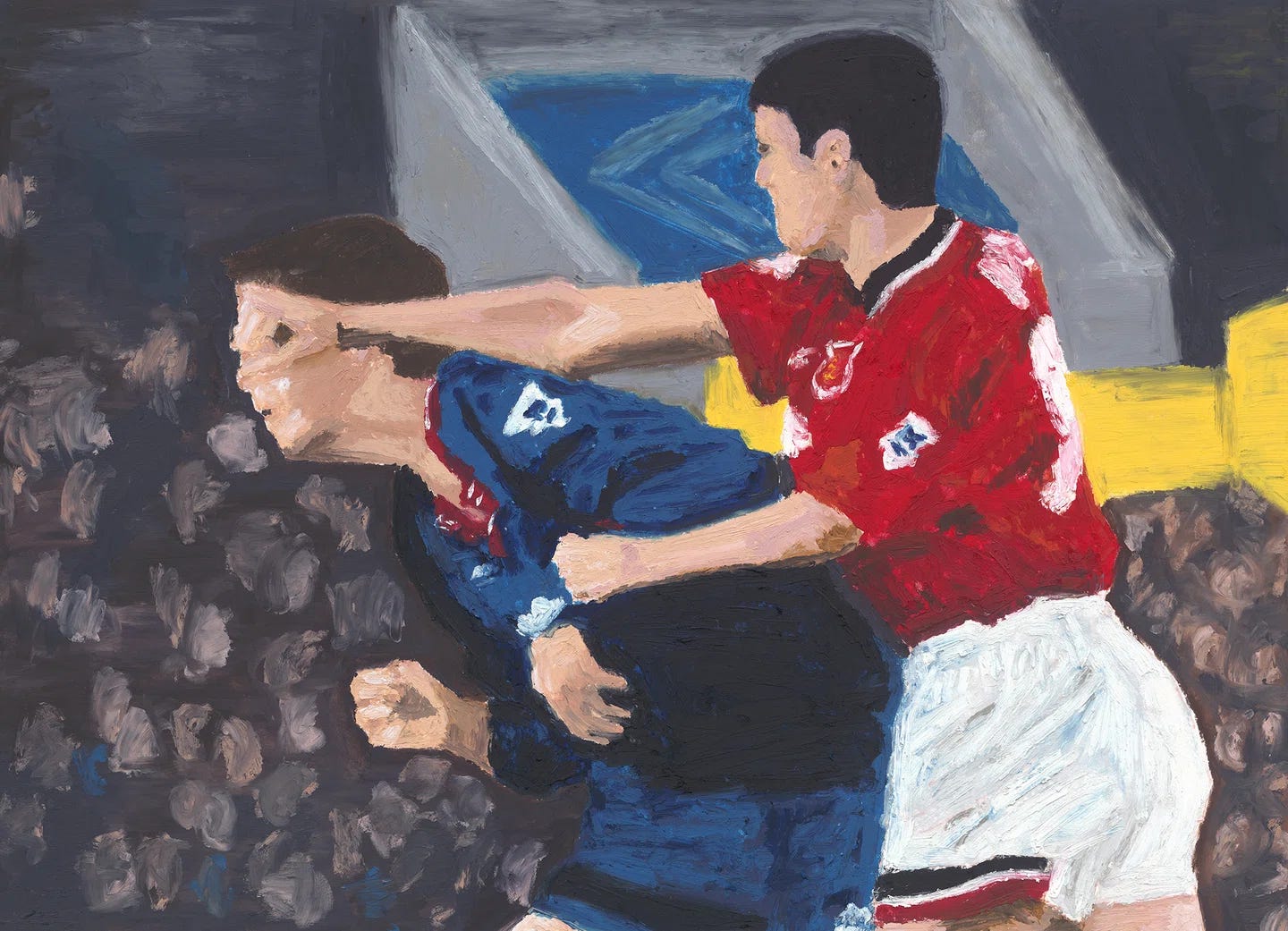
🟥 Irish artist Seán Harte has painted every red card Roy Keane ever received, one by one, in oil pastel. The idea came from a podcast. When Keane said the number of cards was six, he was reminded it was actually twelve. Harte first drew Keane standing on Gareth Southgate purely to amuse himself, and then things got out of hand. Keane was his favorite player as a kid, and when he wasn’t watching football he was drawing it. The carefully smudged pastel strokes give each frame the feel of a still from an action film.
⚽ A football match is one of the densest data objects in sport. Thousands of passes, hundreds of shots, ninety minutes of shifting pressure. Most visualizations compress all of that into charts a specialist has to decode. Alexander Bogachev’s Data Portraits does the opposite. It rebuilds each 2026 World Cup match from its real numbers into a single moving scene. Two blankets in the teams’ colors lie over the pitch, and the seam where they meet shows the tide of possession. Hills rise from the ground wherever a shot happens, their height the quality of the chance. When a goal is scored, the whole pitch floods with the scorer’s color.
🧱 Lego has written the 70-year history of its building instructions. The first simple instructions appeared in 1955; before that, the drawings on the box were the only guide. There was a lovely internal debate in 1960: should a child just be given inspiration, or educated with instructions? Producing instructions was long a manual craft. Each building step was built and laid out on a table, photographed, and the drawings made by hand at a large scale and then shrunk. In 1984 a 3D tool originally built to draw stage sets for Danish television was rebuilt for Lego instructions and used for 17 years under the name Panter. The instruction team, 2-3 people when it was formed in 1983, now exceeds 100.
🦖 Fabien Sanglard has watched Jurassic Park at least ten times, and this time he researched every computer that appears in the film. The details he turned up are as fun as the movie. For the set, Silicon Graphics lent $875,000 and Apple $350,000 in hardware — close to four million dollars in today’s money. In the novel the supercomputer was a Cray, but when Cray brushed off the producers, Thinking Machines happily supplied the machine, and that is how the famous red-blinking CM-5s made it into the film. The blinking pattern of the lights is entirely random. The 7 GB storage tower on Nedry’s desk cost $33,000 back then; today it comes to 49 cents. The video-conference scene is simply a clip playing in QuickTime — you can even see the playback cursor on screen.
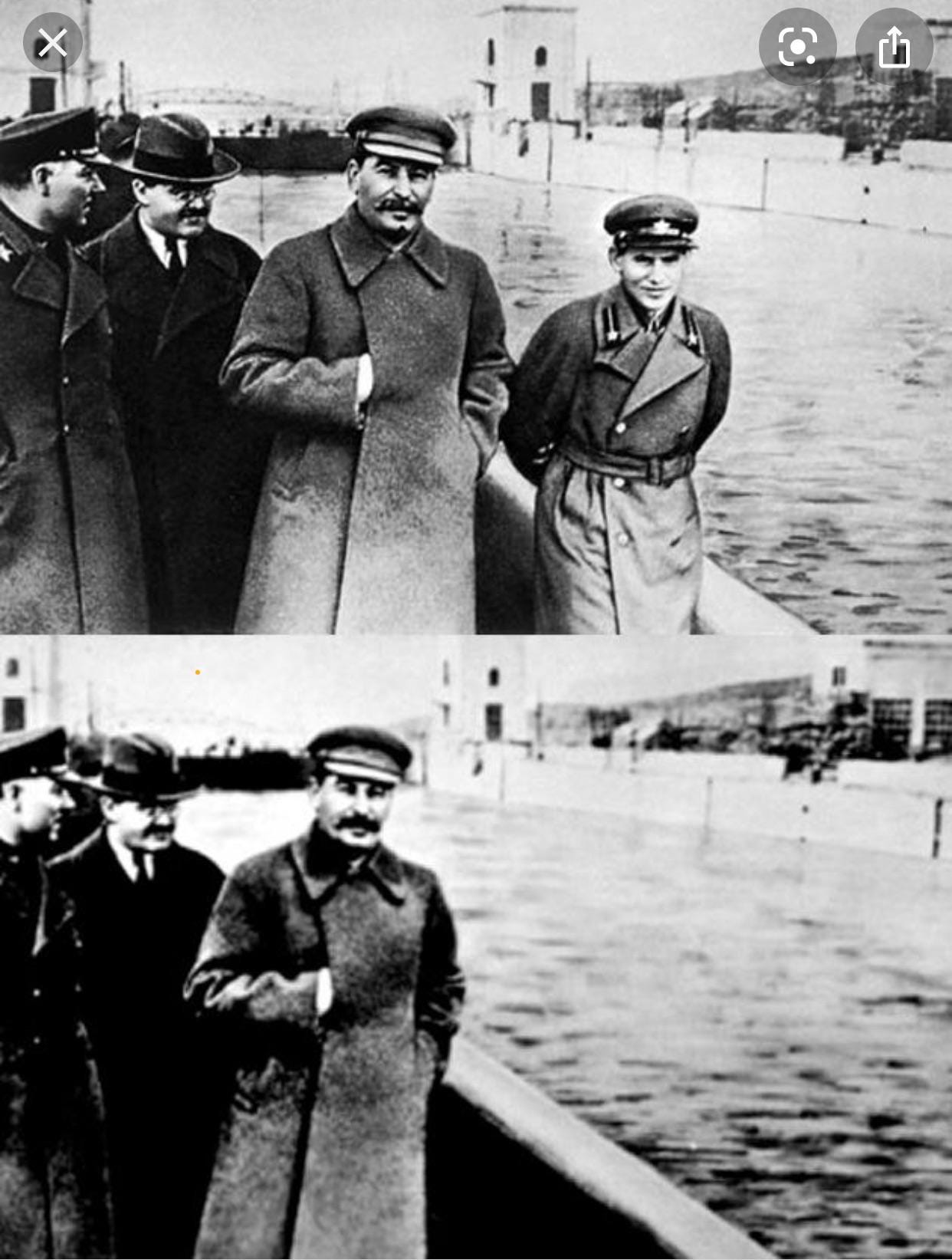
📷 I learned this week that people were retouching photos long before Photoshop. In 1937 Stalin was photographed on the Moscow-Volga Canal beside the secret police chief Nikolai Yezhov. Yezhov was at that time the man running the Great Purge, sending hundreds of thousands to their deaths. A year later he himself fell from favor and was secretly shot in 1940. Then came the photo’s turn. Censors erased Yezhov from the frame, and canal water was painted in where he had stood. The two versions of the photo sit side by side today — four men in one, three in the other. Known to history as “the vanishing commissar,” this frame is one of the most chilling proofs that power can erase not only people but memories.
📰 Your brain was never designed for this much bad news. According to a developmental psychologist, news fatigue is not laziness but the predictable response of a human brain meeting an environment it was never built to navigate. Our ancestors’ survival depended on attending to threats; the one who missed the rustle in the grass left fewer descendants. The trouble is that brain never changed — the world it scans grew. A nervous system that spent thousands of years watching a neighboring tribe and a drought now tries to process a war on one continent, a financial shock on another, and a climate disaster on a third before lunchtime. A study of 105,000 real headlines found each negative word raised click-through rates while positive words did the opposite. Worldwide, 40 percent of people now say they avoid the news at least sometimes or often — the highest figure ever recorded. The fix isn’t to bury your head in the sand.
📱 As Britain debates a social media ban for under-16s, the government ran an experiment with 309 households. Teenagers aged 13 to 17 were assigned to one of three restrictions for a month: 15 minutes per app per day, a 9 p.m. to 7 a.m. curfew, or complete removal of the apps from their phones. All three groups saw improvements in sleep, mood, concentration, study time, and family interaction. The complete ban produced the biggest gain in focus but also the greatest social disruption. The overnight curfew was the easiest for families to maintain and gave the most consistent sleep benefit. The teenagers were candid: the restrictions could be bypassed easily with tablets, old phones, VPNs, and false age declarations.