
Hello everyone. A warning before you start. This week’s issue is very long, so keep it for a quiet moment.
The cameras were the theme this week. More than 70 people sued Meta because the video from its smart glasses, including people in the bathroom and in bed, went to contract workers in Kenya to train the AI, and somebody answered that with an app called ZuckOff that warns you when a pair of those glasses is near you. In America the cameras also moved onto garbage trucks, where an AI now scores your house for long grass and junk in the yard, and most of the warning letters land in the poorest neighborhoods. Meanwhile Trump told the UN that artificial intelligence sounds fake and renamed it super intelligence, and a few hours later the State Department sent an email with the subject line Change in Nomenclature, AI to SI.
Also this week. A 21-year-old student translated Murakami’s new novel into Chinese four hours after it came out, with a program he wrote himself, for $1.90. OpenAI fired contractors who were using AI to do the job of training AI. Australia will hold its Olympic rowing races on a river with 500 crocodiles, and the safety report did not mention them. A church near Chengdu casts almost no shadow. Apple quietly publishes the drawings of the curves in its corners. Japan now has 107,677 people over the age of 100. Singapore is paying people one dollar to read for fifty days. Pittsburgh paid students five dollars a night to sleep and their grades went up. The smell of coffee is enough to calm you down. A little ice cream is not the enemy. And the most expensive iPhone in the world is the one sold in Turkey.
I am Ali, and every week I read a lot and keep only what is worth your few minutes. This letter gets written because some of you pay for it, and I am grateful to all of you. If you do not want to use Substack, you can support it on Patreon.
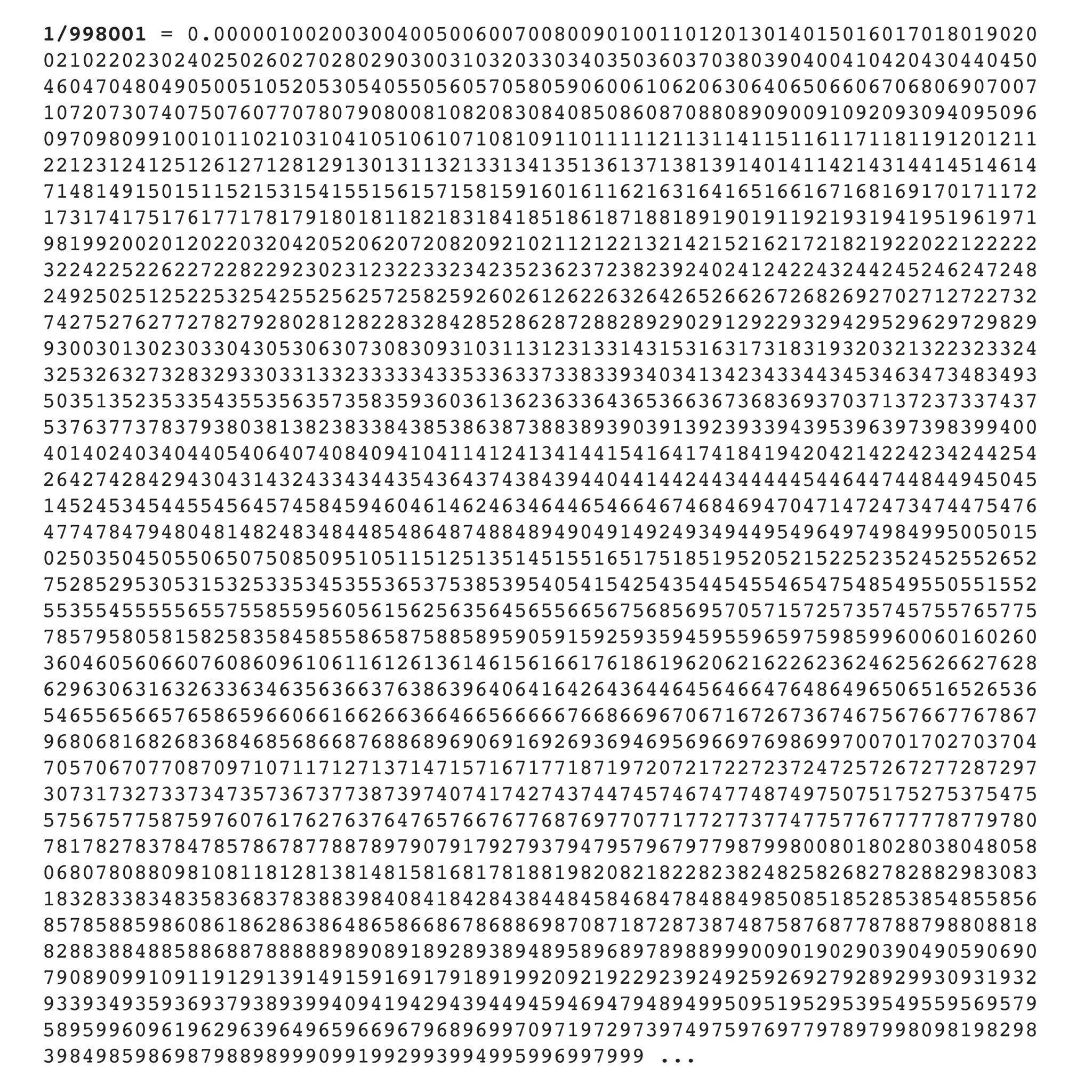
🔢 If you divide 1 by 998,001 you get all three-digit numbers from 000 to 999 in order, except for 998. The math behind it is here.
🔷 If we cut a surface into eight flat pieces and want each piece to touch the other seven along an edge, we cannot do it on a flat plane or on the surface of a simple ball, because there is not enough room. An independent researcher named Ruslan Mizhaev did it on a surface with three holes. The shape has eight faces, each face is a nine-sided polygon, it closes with 24 corners and 36 edges, and three faces meet at every corner. The best part is that all the corners sit on whole number coordinates. So the shape is not only a drawing, it is a real object that anyone can check with equations, to confirm that the faces really are flat and that no piece cuts through another. There is no solid known method for building shapes like this, mathematicians rely on computer searches, geometric intuition and models.
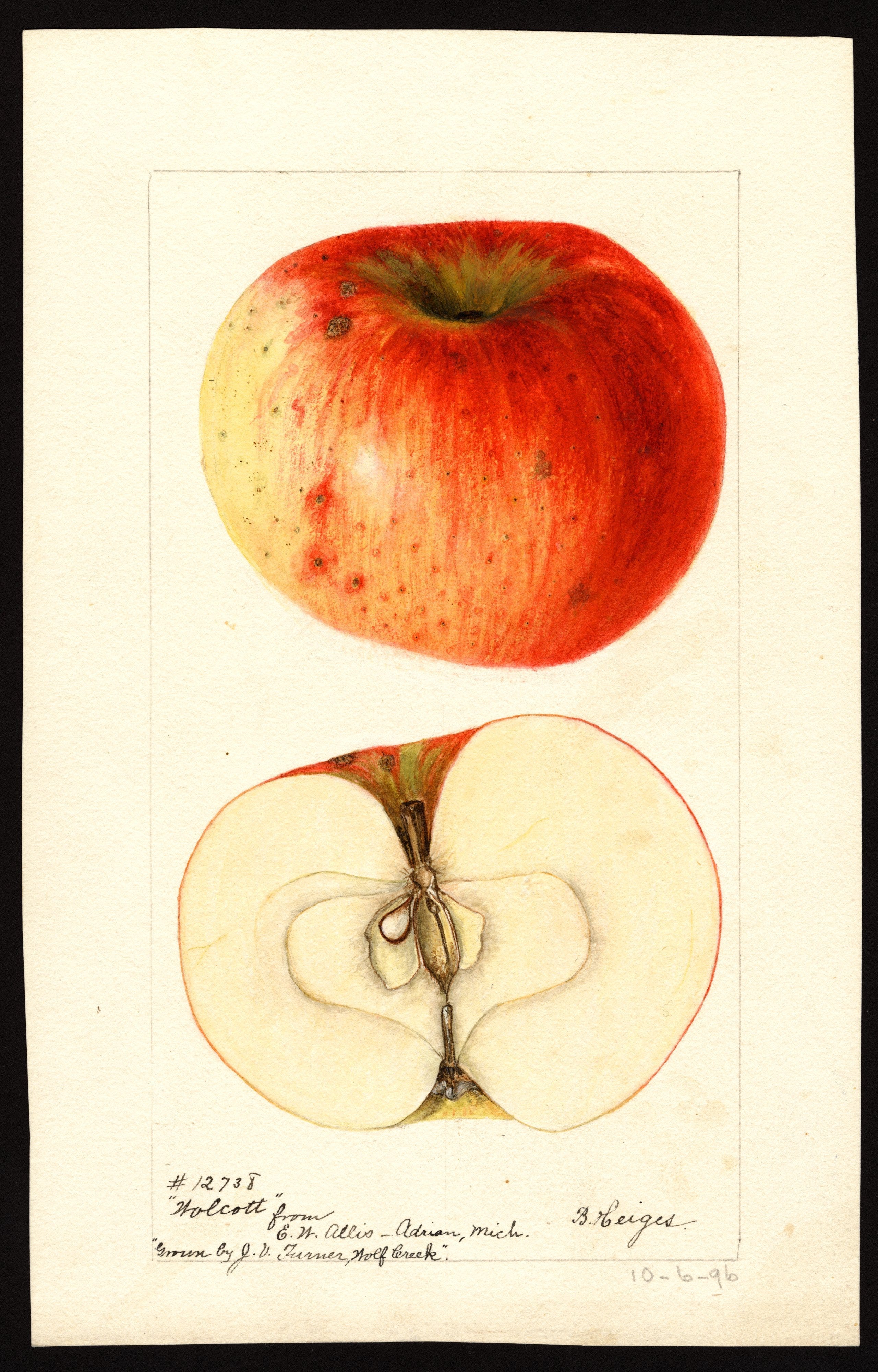
🍎 Between 1887 and 1942 the US Department of Agriculture hired artists to paint fruit for its scientific reports. The result was more than 7,000 very realistic watercolors of apples, melons, plums and pears. They are all public domain, you can download and print them. You can reach the whole archive here.
🧑🚀 I learned something very interesting this week. The last day the whole human species lived on Earth at the same time was October 31, 2000. Because that day the first crew of the International Space Station took off from Kazakhstan, and since that minute we have not spent a single second without at least one human in space. There is even a site for it, howmanypeopleareinspacerightnow.com, it shows how many people are up there right now. So no one born after 2000 has seen a moment when a hundred percent of the world's population was on the ground. In this new age where we send people from Earth into space, greetings to the ones up there.
🎓 U.S. News published this year's American university ranking and, as you would guess, there was no surprise. MIT sat at the top of the list again. At undergraduate level it is number one in engineering, computer science and economics, all three. In engineering it gives up the lead to no one in five main fields, from aerospace to mechanical. It is at the top in computer science and economics too. It is also unmatched in giving undergraduates the chance to get into labs and do real research.
🌬️ A research team at the same university that works on extreme weather has built a smart model that calculates where wind farms in Texas should be planted. With simple logic, anyone looking at an average wind map would put all the turbines in northwest Texas, where the wind blows hardest. But the model kept putting some of them on the Gulf Coast, where the wind is much weaker. Because the winds in the two regions blow in turns during the day! One calms down while the other picks up, so the power stays balanced all day long without a single gap, and it fills the energy hole that opens when the sun sets. The research also says that in the last ten years storms and tornadoes have taken more lives and burned more money than hurricanes.
🏭 Here is a frightening forecast that shows how the huge data centers built in the AI rush are turning the world into an energy glutton. According to BloombergNEF, data centers in America will burn about 425 million cubic meters of natural gas a day by 2035, only to keep those servers running! Let me explain how big that number is. It is more than the total daily gas use of every country in the world except China, Russia, Iran and the US itself! Even Germany, with all its industry, runs on 255 million cubic meters a day. And only nine months ago the same group put this estimate at 195 million cubic meters. So the forecast more than doubled in less than a year.
♨️ For anyone who feels low thinking about the energy that AI and server farms use, there is a sweet piece of vision and good sense from Denmark. In the city of Odense, the oven-like waste heat from Meta's huge data center covers the heating of about 11,000 homes! The local heating company put 400 million kroner into plants that collect the heat from the water cooling the servers and pump it into the city's hot water network. When all the plants are running, the number of homes heated by waste heat will reach 12,500.
🔥 According to a new study, an unlucky baby born in Europe after 2025 will face almost twice as much "extreme fire weather" in a lifetime as a grandparent born in 1950. We are not talking about nice summer heat, we mean those nightmare days when the air is bone dry, hot and windy, when one thrown cigarette can turn a whole forest into hell in seconds. Eighty-six percent of the bill comes from climate change, and the other fourteen percent comes from people living longer because medicine got better!
⛪ I came across a very interesting building this week. A church built in the city of Chengdu, China casts almost no shadow in daylight. At night, when it is lit from inside, it shines in the middle of the dark like a giant lantern.

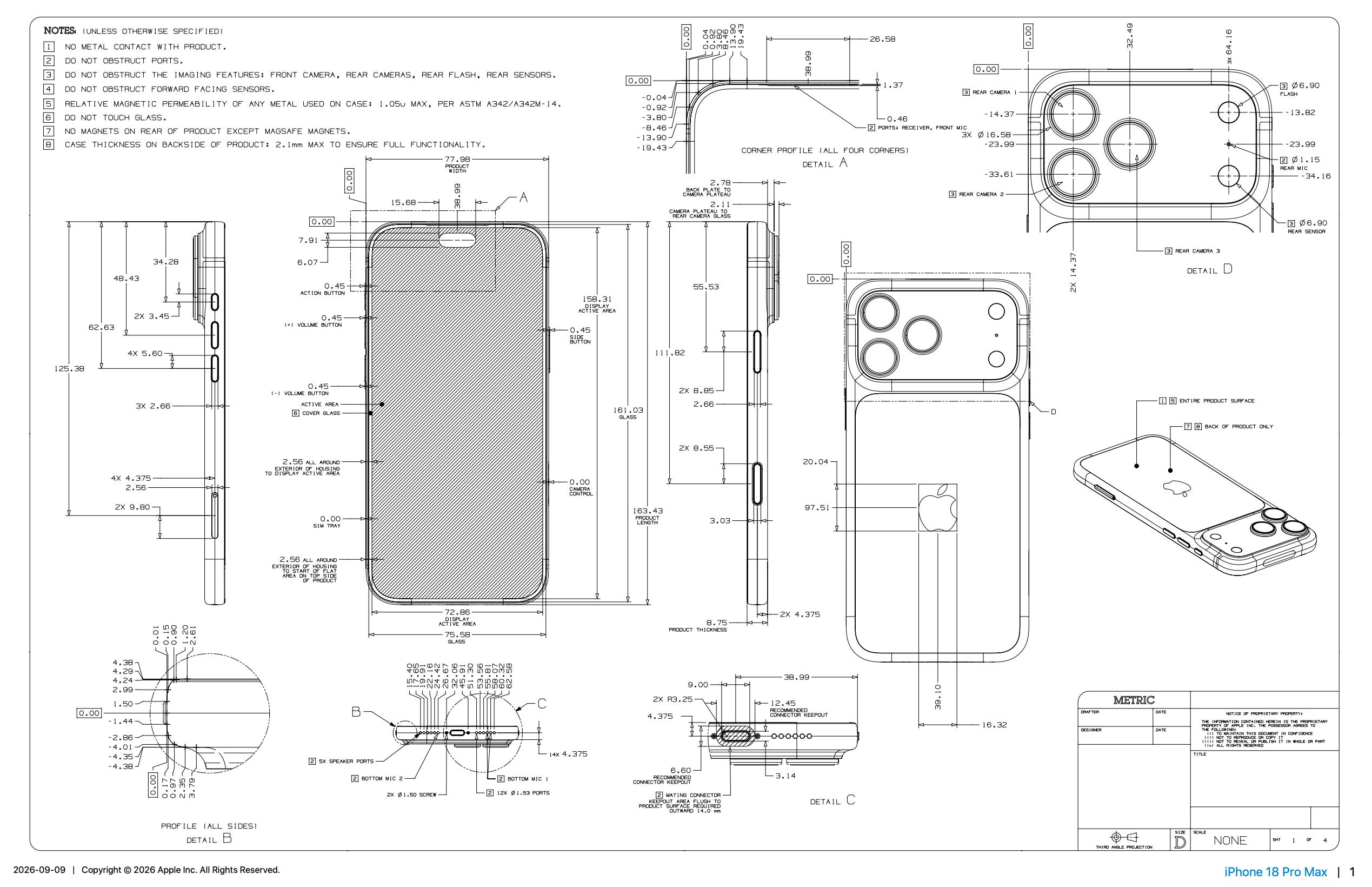
📐 This week I learned that Apple publishes detailed technical drawings of its devices for anyone to use, so accessory makers can build cases and bands to the millimeter. Every detail is there, from magnet positions to the diameter of the speaker holes. The dazzling part is the corner design. On Apple devices there is no abrupt break where the straight edge becomes a curve, the curvature rises and falls gradually. So those corners are not a simple circular arc but a “squircle,” a mathematical curve somewhere between a square and a circle. A tremendous resource for anyone with a 3D printer.
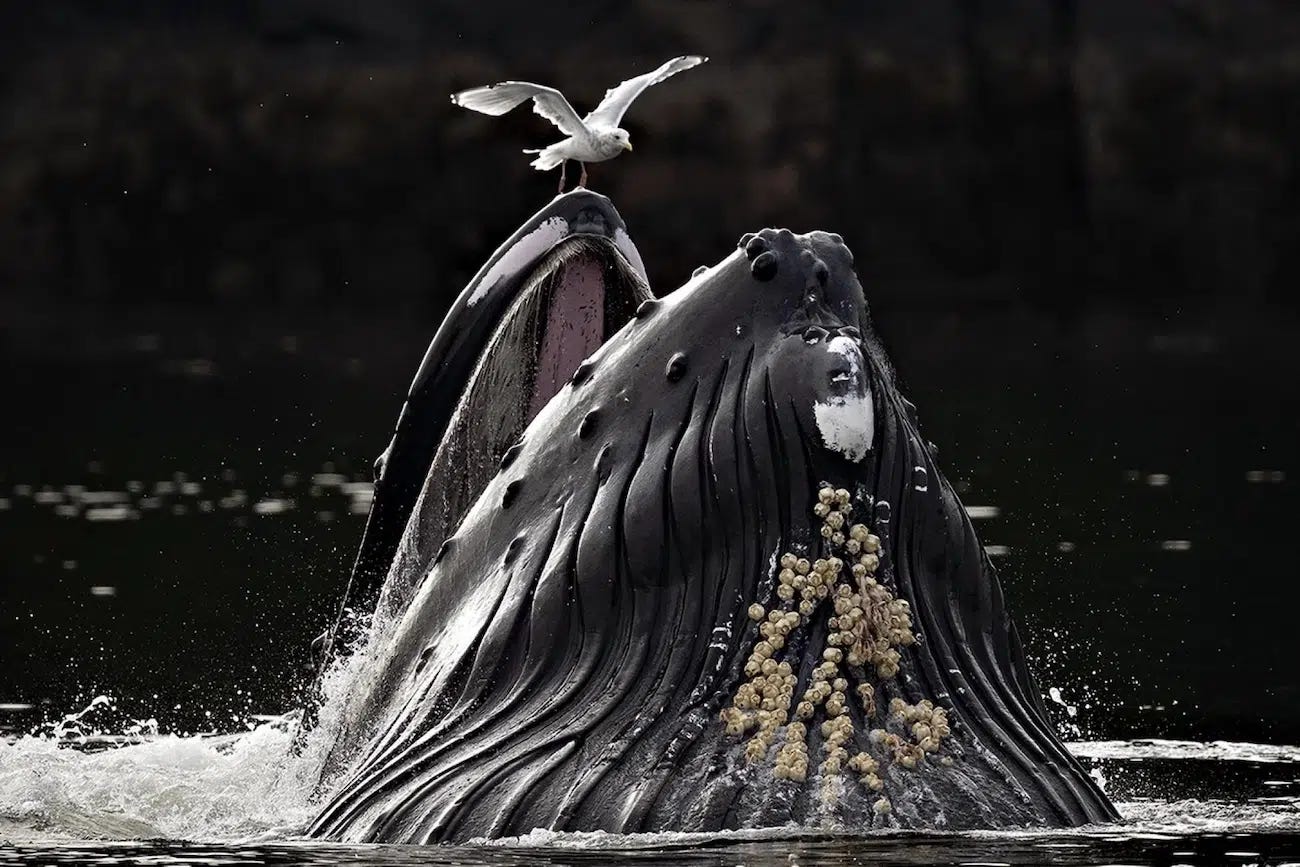
📸 The 2026 European Photography Awards wrapped up and Canadian photographer Michelle Valberg was named professional photographer of the year. What won it for her is this magnificent frame, caught at the exact instant a gull landed on the jaw tip of a humpback whale bursting out of the water as one enormous mass with its mouth wide open.
🌈 One of the loveliest things you can make with children. You cut a figure out of cardboard and cover the openings with colored acetate, then hold it up to the sun and it drops a rainbow shadow on the ground.

🚚 The Tesla Semi has finally started reaching customers. Unveiled in 2017 and promised for production in 2019, the truck is on the road nine years later. Tesla says its new Nevada factory can build 50,000 trucks a year. Fully loaded, the long range version covers 800 kilometers, the battery is 822 kilowatt-hours and at their own megawatt-class charger it goes from 3 to 60 percent in thirty minutes. The company argues it is cheaper than diesel trucks on both energy and maintenance, and by the way diesel in America is now past $6.50 a gallon. PepsiCo, DHL, US Foods and ABF are among the first customers. The two things not mentioned at the event were the order book and the price. The long range version is said to be $290,000, the promise back in 2017 was $180,000.
🔦 Bambu Lab, which has been tearing up the 3D printer market, broke with habit and showed up with something that is not a printer for the first time. The desktop machine they call the R1 is a full 55-watt carbon dioxide laser. It slices wood, leather, fabric, paper and clear acrylic like butter while engraving glass, stone and ceramic without complaint. In a single pass it can cut through 18 millimeters of walnut plywood or 20 millimeters of acrylic like a knife. Preorders opened this week, so best of luck to everyone burning with the dream of a workshop at home... The price is $2,499.
🔖 Someone has come up with an ironic invention for people who reach for the phone and lose their focus while reading, solving technology with more technology. A USC student designed a $159 smart bookmark called Mark II for printed books. You run it over a sentence you like and it scans and saves the line instantly. If something occurs to you, you whisper to the bookmark and it turns your voice into a note and drops it into Notion or Apple Notes. One charge lasts a week. The idea is lovely, it keeps the reading experience intact without touching the phone, but of course it is expensive. $159.
📚 Singapore tried an entirely different way of getting people to read. To pull citizens glued to their phone screens back to books, the government launched a sweet little bribery scheme that makes you say now I have seen everything. You log your reading time on the state’s official site. Record a session of at least 15 minutes every day, and once you clock up a full 50 days the state deposits 1 Singapore dollar in your account! So you have to read without a break for two months for a symbolic sum that is not even worth 1 American dollar.
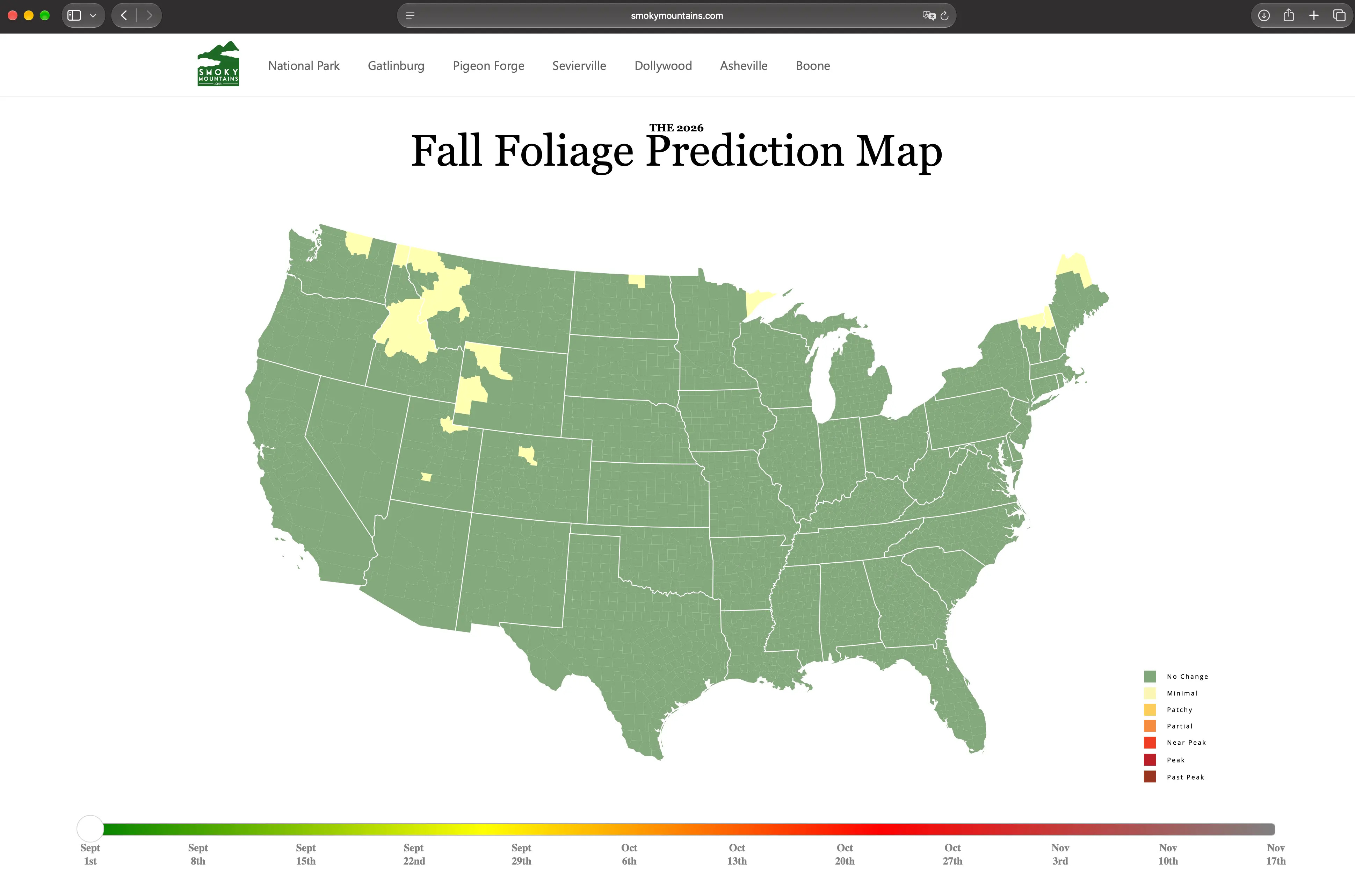
🍁 The tradition held once again and smokymountains.com published this year’s 2026 interactive map showing exactly where and when the leaves will turn red and gold, day by day, across every state in America. As you drag the slider at the bottom from September toward November, that yellow-red wave slides from north to south, from the mountains down to the plains. A wonderful service. What can I say, bless whoever thought of it!
🍕 There is a unique X account called “Pentagon Pizza Report” that tracks how busy the pizza places around the Pentagon are through Google Maps. The purpose and the logic are extremely simple. Just before a big military operation goes off somewhere in the world, the hours stretch at the Pentagon and the thousands of people inside start ordering pizza like mad. Sure enough, on Saturday evening the account posted that the Domino’s closest to the Pentagon was many times busier than usual. The same post also shared how busy the nearest gay bar was.
🐊 With preparations underway for the 2032 Brisbane Olympics, a magnificent decision has come out of Australia, one for the history books. The canoe and rowing events will be held on the Fitzroy River, home to roughly 500 giant saltwater crocodiles that reach 6 meters in length. Here is the sweetest part. The independent technical panel that assessed the river’s suitability accounted for wind, water levels and flood risk down to the finest detail, but did not see the need to so much as mention the 6-meter crocodiles who actually live there! (An insignificant detail, after all, why go out of your way to dent the athletes’ morale?) When the criticism mounted, Olympic committee president Andrew Liveris offered a highly persuasive defense, decreeing that “there are sharks in the ocean and we’re still surfing.” Behold the depth of logic and the vision...
📱 Apple put its new iPhone models in the window last week. According to Counterpoint Research, the country where the iPhone 18 Pro and 18 Pro Max sell for the most in the world is, to nobody’s surprise least of all mine, Turkey again. The Pro Max 256 GB model carries a $1,299 tag in America, and in Turkey the price has climbed to 150 thousand lira. At today’s rate that is about $3,100. So nearly two and a half times the American price. Some clever soul will say “then let them buy it in America.” It does not work that way. A phone brought in from abroad is cut off from the network 120 days after it enters the country. To keep it alive you have to pay the state an IMEI registration fee, which this year is 54,258 lira (about $1,100)! And you get to enjoy that generous privilege only once every three years.
🪥 You may remember I wrote about Dyson’s $499 “smart” toothbrush in the last issue. Well, the device, the fruit of 6 years of R&D and 38 patents, blew up exactly one day after it went on sale! Water was getting into the battery compartment, the brushes were dying within 30 seconds, and the thing was pulled off the shelves in a hurry. Dyson refuses to say how many devices failed. So in short, a $500 device built to be used in the bathroom and to squirt water was killed by water.
🤖 Let us cheer ourselves up a little. At the United Nations General Assembly, Trump announced that he is officially changing the name of artificial intelligence. His reasoning is this. The word artificial apparently makes the intelligence sound fake, whereas it is not fake at all, it is amazing. From now on American government documents will say super intelligence instead of artificial intelligence. A few hours after the speech, an email landed in the State Department’s bureau of international organizations. The subject line was Change in Nomenclature, AI to SI. All documents, position papers and press statements will use SI from here on. The next day American representatives used the new term at the Security Council meeting on AI.
🧑💻 OpenAI has thousands of contractors working to improve its models. These people read real ChatGPT conversations, rate the answers and critique them, which is to say they are hired to put a human hand into the process. According to 404 Media, some of them have been fired for handing that job to AI. The irony does not stop there. The reviewers whose job is to catch the ones using AI are also banned from using AI, and they are not even allowed to use AI detection tools, because those are considered unreliable. Reviewers are told to look for repeated words, work finished suspiciously fast and excessive use of the em dash, and never to tell the other side why they are suspicious. There is a darker side too. One person doing this work says they pick the worst answers on purpose to make the model worse.
🈶 Just four hours after Haruki Murakami’s new novel came out in Japan, a Chinese translation of it landed on the internet! The person who did the translation is a 21-year-old literature student. And he did it with a small program he wrote himself, at a total cost of $1.90. The code splits the book into chunks, keeps the context with the preceding paragraphs and builds a glossary of terms as it translates. Two professional translators who saw the text deleted their own drafts out of embarrassment.
🕶️ Anyone walking around wearing Meta’s “smart” glasses (and the innocent bystanders who wander into the frame without knowing it) is in trouble. More than 70 users have filed a class action against the company. The allegations are a full technological nightmare. The footage the glasses record, including people’s most private moments while undressing, in the bathroom, in bed and even typing in a bank password, was apparently being sent to subcontracted workers in Kenya so the AI could be trained! The workers sit and watch these videos one by one and label them. Meta, meanwhile, is in its usual shameless mode of “we are innocent, and anyway everyone works this way.”
🚫 At least some people are pushing back against Meta’s indifference toward human privacy. For instance an app called ZuckOff has appeared, a name I personally love, and it warns you if somebody near you is wearing Meta’s glasses.
🚛 The camera business does not end with glasses. In some states, municipalities have started feeding footage from cameras mounted on garbage trucks to AI and producing blight reports on households. Overgrown grass, debris in the yard, recycling and so on get scored from 1 to 4. In Dallas, more than 21 thousand households have been sent warning letters since April. Most of those letters went to neighborhoods with average annual incomes below $41 thousand.
☕ Scientists in Japan sat down to answer the question “does the smell of coffee actually relax a person?” and sat 20 university students next to freshly brewed coffee and asked them only to breathe in the aroma. After a five-minute sniffing session the students’ fatigue, tension and gloom scores dropped sharply while the relaxation indicators in their brain waves shot up (not a peep from their heart rates). They did not need to run a study, they could have asked me and I would have told them.
🍷 Coffee came out innocent, and next up is a more contentious drink. Researchers at Stanford, looking for an answer to “is this social drinking business really so innocent?”, put 83 adults through hand dexterity and balance tests, all of them non-smokers, perfectly healthy and content with a glass or two a week. At the end of the day, as age advances and the total number of glasses downed over a lifetime rises, hand dexterity was observed to slow down. The odds of holding your balance for a minute with your eyes closed also fell by a factor of 2.3.
🍨 In two huge Harvard studies following 190 thousand people over decades, people who ate a small amount of real ice cream each week turned out to have lower rates of type 2 diabetes and heart disease than those who ate none. Before you celebrate, let me say this. The study is observational, meaning it does not say ice cream produced this result, only that the two appear side by side. There may be other differences between the people who eat ice cream and those who do not that explain the picture. Harvard’s own nutrition source says the link between dairy and diabetes is mixed, and that the most consistent association shows up in yogurt rather than ice cream. So ice cream is not a health food, but there is no need to fret over the occasional bowl.
😴 Researchers at the University of Pittsburgh ran an interesting study by paying 1,100 students a $5 bribe for every night they slept at least seven hours. Once $5 a night entered the picture, 26 percent of the students hit the seven-hour mark more often. But when the money was handed over in a lump sum at the end of the term instead of landing warm every morning, the effect dropped by a third. The money-free “come on now, go to sleep” notifications did not stir a single leaf. In short, if you want to set humanity on the right path, there is no more effective educational tool than cash hitting the account every morning...
🎂 According to Japan’s health ministry, there are 107,677 people over the age of 100 in the country, a number no other country in the world can match. In 1963 the count of people over 100 was just 153. And 88 percent of those who pass a hundred are women. The secrets of a long life are given as walking and gardening kept up into old age, plus the strong neighborly ties and sense of purpose that keep a person going.
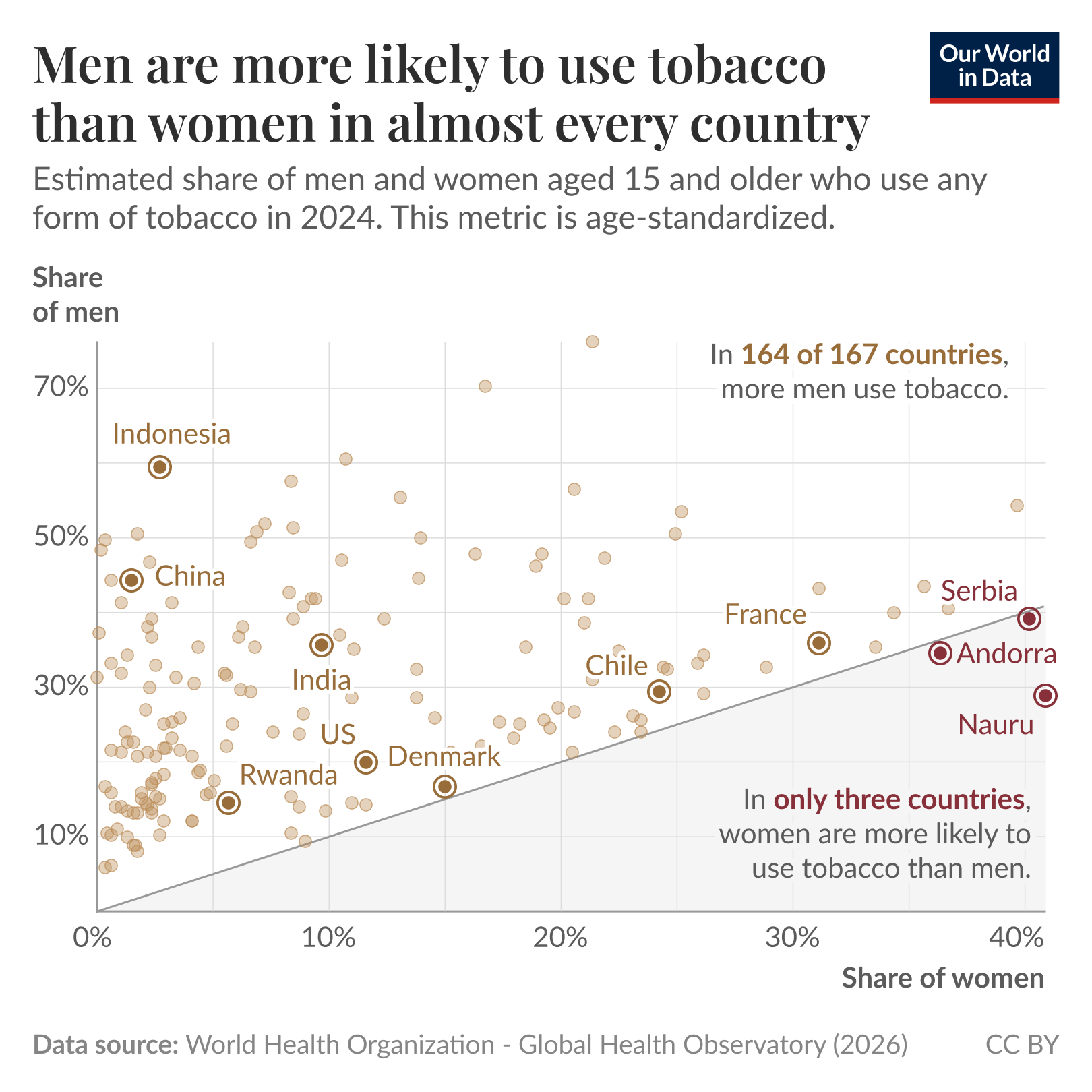
🚬 The latest World Health Organization data lays out the global map of tobacco addiction and the gulf between the sexes. One in five adults in the world uses tobacco. In 164 of the 167 countries examined, men are far ahead when it comes to puffing away. There are only three tobacco-loving exceptions where women are ahead of men. Serbia, Andorra and Nauru.
💰 The Washington Post went through Federal Election Commission records and pulled out the 50 biggest donors of the 2026 midterm cycle. $1.78 billion in total. Of that money, $1.07 billion comes from Republican-leaning donors, $454 million from Democratic-leaning ones and $248 million from interest groups that give to both sides. Most of it goes to super PACs, which can accept unlimited donations. At the top of the individual list is George Soros with $102 million.
💸 The hand rich countries extend to poor regions in “development aid” has been pulled back by nearly a quarter over the past two years. Because those resources are not going into humanitarian aid but, as you know, are being poured at full speed into weapons and the defense industry. According to a new analysis, if these cuts carry on like this, a full 7.6 million people will lose their lives by 2030, 1.4 million of them children under five. The researchers also sat down and did the moral arithmetic. The roughly 3,000 billionaires in the world hold a combined $20 trillion. A tiny 3 percent tax on that wealth would be enough to save 29.5 million lives by 2030. Even a symbolic 1 percent tax means 15 million lives. But since the world’s priority is not keeping people alive but building more effective weapons, these calculations are doomed to stay sweet wishes on paper...